
Bio-based raw materials are moving from specialist laboratories into packaging, personal care, consumer goods, textiles, food-service products and industrial manufacturing. Their appeal is easy to understand: instead of relying only on fossil carbon extracted from petroleum or natural gas, manufacturers can use carbon originating from plants, forestry resources, agricultural residues, microorganisms, marine resources and other renewable biological sources.
However, “bio-based” is not a complete sustainability claim by itself. A material may contain renewable carbon yet remain non-biodegradable. A biodegradable polymer may contain both renewable and fossil-derived components. A plant-derived ingredient may require significant land, water, energy or chemical processing. Buyers therefore need to separate feedstock origin, material performance, manufacturing impact and end-of-life behavior rather than treating every material with a biological origin as automatically sustainable.This guide explains the definition, major feedstock sources, commercial examples, differences from fossil-based materials, industrial applications and manufacturing benefits of bio-based raw materials. It also provides a practical framework for procurement and product-development teams evaluating Synlife material solutions, including Yogtic® bio-based resin and ZeRoll® biodegradable plastic cling film.
Bio-based raw materials are substances wholly or partly derived from renewable biological resources and used as inputs for chemicals, polymers, ingredients, fibers, coatings and fuels. The biological source may be obvious, such as wood fiber, starch or vegetable oil, or it may be transformed through fermentation and chemical processing into a molecule that is visually indistinguishable from a fossil-derived equivalent. The important point is the origin of the carbon or functional ingredient, not whether the material still looks natural.
“Bio-based,” “biodegradable,” “compostable,” “renewable” and “recyclable” describe different attributes. They should not be used as interchangeable marketing terms.
Bio-based describes the renewable biological origin of all or part of a material.
Biodegradable describes the ability of a material to be broken down by microorganisms under specified environmental conditions.
Compostable means a material meets defined biodegradation, disintegration and ecotoxicity requirements under a specified composting standard.
Recyclable describes the potential to collect and reprocess a material within an available recycling system.
Renewable describes a resource that can be replenished on a human-relevant timescale when responsibly managed.
A polyethylene made from sugarcane ethanol can be bio-based but is chemically similar to fossil-derived polyethylene and does not become biodegradable merely because its carbon came from plants. Conversely, some biodegradable polyesters contain fossil-derived components. Procurement documents should therefore specify both bio-based content and intended end-of-life route.
Bio-based carbon content is commonly verified through radiocarbon analysis. Recently living biomass contains detectable carbon-14, whereas fossil-derived carbon is generally too old to retain a measurable carbon-14 signal. ASTM D6866 is widely used to determine the proportion of modern biobased carbon relative to the total organic carbon in a product.
The USDA BioPreferred® Voluntary Labeling Initiative uses ASTM D6866 to verify biobased content. Products that fall within an established USDA product category must meet the minimum requirement specified for that category. Products outside an established category generally must contain at least 25% biobased content to qualify, although applicants may propose an alternative minimum for USDA review. This threshold is specific to the USDA program and is not a universal definition of a biobased product.Under the USDA framework, the reported percentage represents biobased organic carbon as a proportion of total organic carbon. It does not necessarily represent the percentage of the product's total mass derived from biomass. Water, inorganic carbon and non-carbon-containing components are excluded, so the reported biobased-carbon percentage may differ significantly from the product's bio-based material, polymer or ingredient content by weight.
A drop-in bio-based chemical has the same molecular structure as its fossil-derived equivalent, but its role in manufacturing depends on the type of substance. Bio-based ethylene is a chemical feedstock used to produce downstream materials. Bio-based propylene glycol and selected solvents are generally used in chemical formulations or production processes. Drop-in polymers such as bio-based polyethylene have the same chemistry as their fossil-derived counterparts and can generally be processed in established polyethylene manufacturing systems; where collection and recycling infrastructure accepts conventional polyethylene, they may also enter the same recycling stream. Novel bio-based materials have different molecular structures and may offer new properties or distinct end-of-life pathways. PLA, PHA, cellulose derivatives, starch blends and fermentation-derived functional ingredients fall into this broader category and may require adjustments to drying, processing temperature, tooling, storage or formulation.
Material origin affects brand claims, carbon accounting, supplier documentation and regulatory positioning. It can also affect performance. A manufacturer selecting bio based raw materials must define the product function first: rigidity, toughness, transparency, flexibility, moisture management, skin compatibility, barrier performance or biological activity.Synlife positions bio-based raw materials as a portfolio rather than one polymer category. Its current site groups Yogtic® resin, Biowatol® moisturizing ingredient and sialic acid within the raw-material platform, illustrating how industrial biotechnology can support both structural materials and functional ingredients.
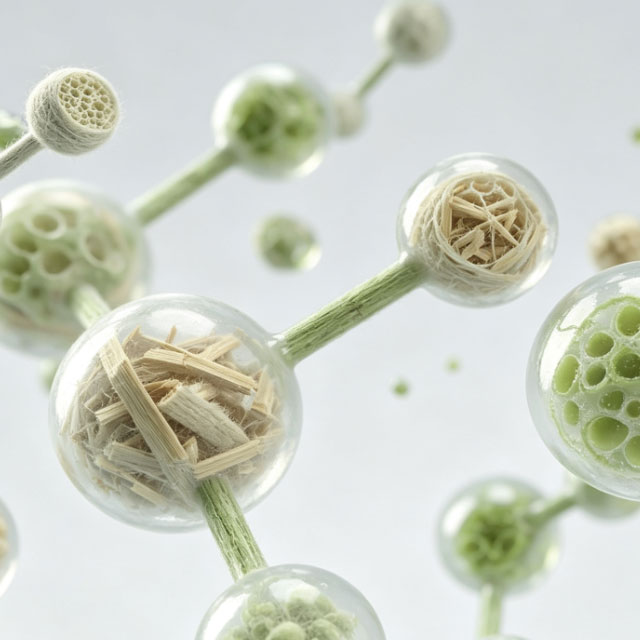
The main sources of bio-based raw materials are agricultural crops, forestry resources, plant oils, natural fibers, agricultural and food residues, algae, marine biomass and fermentation using microorganisms.Feedstock selection influences environmental impact, supply stability, cost, traceability and material properties. A manufacturer should not evaluate renewable content without asking where the biomass came from and how it was cultivated, collected or recovered.
Corn, sugarcane, sugar beet, cassava and other carbohydrate-rich crops are established sources for fermentation. Sugars can be converted by microorganisms into ethanol, lactic acid, succinic acid and other chemical building blocks. Lactic acid can then be polymerized into PLA.These supply chains benefit from mature agricultural and fermentation infrastructure. Their limitations can include competition for land, exposure to weather and commodity-price volatility. Responsible sourcing, agricultural efficiency and regional feedstock selection influence the overall result.
Wood, straw, corn stover, bagasse and other plant residues contain cellulose, hemicellulose and lignin. These components can be processed into fibers, sugars, aromatic chemicals, fillers and polymer building blocks.Lignocellulosic resources are attractive because many are non-food residues or by-products. They are also technically more difficult to process than refined sugar because plant cell walls are resistant to breakdown. Pretreatment, enzymes and separation technology affect yield, energy use and cost.
Soybean, rapeseed, sunflower, castor, palm and other oils can be converted into polyols, lubricants, surfactants, plasticizers, coatings, adhesives and polymer intermediates. Castor oil is especially useful because its chemical structure provides reactive hydroxyl functionality.The sustainability profile varies widely by crop and region. Buyers should review land-use risk, certification, traceability and agricultural practices rather than assuming that every vegetable oil has the same impact.
Cellulose, hemp, flax, jute, bamboo and other fibers can reinforce composites, form paper and molded-fiber packaging, or provide texture and strength in consumer products. Natural fibers often have lower density than glass fibers, which can support lightweight components.Moisture absorption, biological variability and interface adhesion can affect composite performance. Surface treatment and compatibilizers may be needed to improve bonding with a polymer matrix.
Rice husks, wheat straw, fruit residues, brewery by-products, used cooking oils and other side streams can become sources of fibers, sugars, oils, fillers or fermentation substrates. Using residues can reduce dependence on virgin feedstock and create additional value from existing production.Residue is not automatically impact-free. Collection, drying, contamination, seasonal availability and competing uses must be considered. Some agricultural residues are needed to maintain soil carbon and fertility, so removing all available biomass may create unintended effects.
Bacteria, yeast, fungi and engineered microorganisms can convert renewable carbon sources into acids, alcohols, polymers, proteins and functional molecules. Fermentation provides controlled production and can generate high-purity molecules that are difficult to extract directly from plants.Synlife describes Yogtic® as sourced from biomass including corn, sugarcane and straw and presents Biowatol® as a precisely fermented moisturizing ingredient. These examples show how a biological feedstock can be converted into either a material platform or a formulation ingredient.
Algae can supply oils, polysaccharides, pigments and proteins without necessarily using conventional agricultural land. Seaweed-derived alginate, carrageenan and agar are already used in food, pharmaceuticals, coatings and packaging research.Commercial viability depends on cultivation, harvesting, drying and extraction efficiency. Marine ecosystems and local biodiversity also require responsible management.
Biotechnology can use captured carbon dioxide, methane or industrial gases as inputs for microbial production, but the use of a biological production process does not by itself make the resulting product bio-based. Under commonly used European definitions, a bio-based product is wholly or partly derived from biomass or other biological resources. Products made from biogenic CO₂, biomethane or biomass-derived syngas may qualify when their biological carbon origin is demonstrated, whereas products made from fossil-derived or industrially captured gases require separate carbon-origin and claim assessment. Buyers should request clear feedstock definitions, process boundaries, scale status, energy assumptions and third-party life-cycle or carbon-origin documentation.
Emerging biological manufacturing pathways can use biogenic CO₂, biomethane, biomass-derived syngas, or selected industrial waste gases as carbon inputs. However, products made from fossil-derived or industrially captured gases should not automatically be described as bio-based; their carbon origin and applicable claim framework must be identified separately.
Examples of bio-based materials include PLA, PHA, bio-based polyethylene, cellulose, starch blends, natural-fiber composites, bio-based polyamides, fermentation-derived glycols and bioactive ingredients.The following examples serve different functions. Some are structural plastics, some are fibers or coatings, and others are functional ingredients used in skincare, nutrition or advanced formulations.
| Bio-Based Material | Typical Feedstock | Main Properties | Common Applications | Important Qualification |
|---|---|---|---|---|
| PLA | Fermented sugars from corn, sugarcane or other biomass | Transparent, rigid and processable through several plastics methods | Packaging, cups, trays, fibers, stationery and molded goods | Often brittle without modification; compostability depends on grade and conditions |
| PHA | Microbial fermentation of sugars, oils or residues | Broad property range and biodegradation potential under selected environments | Packaging, coatings, agricultural products and specialty items | Cost, processing window and supply scale vary by grade |
| Bio-based PE | Plant-derived ethanol converted to ethylene | Equivalent chemistry to conventional polyethylene | Bottles, films, caps and molded packaging | Bio-based but generally not biodegradable |
| Cellulose and derivatives | Wood, cotton or agricultural biomass | Fiber strength, film formation and broad chemical versatility | Paper, textiles, coatings, membranes and molded fiber | Processing chemicals and forestry sourcing influence impact |
| Starch blends | Corn, potato, cassava or other starch sources | Renewable content and useful film or foam behavior when formulated | Bags, loose-fill packaging and food-service items | Moisture sensitivity and blend composition must be verified |
| Natural-fiber composites | Hemp, flax, jute, wood fiber or crop residues | Low density and reinforcement potential | Automotive interiors, furniture and consumer goods | Moisture control and fiber-matrix bonding are critical |
| Bio-based polyamides | Castor oil or other renewable intermediates | Engineering performance, chemical resistance and durability | Automotive, electronics, sports and industrial components | Not all grades are biodegradable |
| Fermentation-derived glycols and ingredients | Sugars or other renewable carbon sources | Purity, humectancy, solvent function or biological activity | Cosmetics, personal care, coatings and chemical formulations | Bio-based percentage and functional data should be documented |
PLA is among the best-known bio-based polyesters. It offers clarity and stiffness but may require modification where the product needs high toughness, flexibility or heat resistance. Resin formulation can combine polymer selection, impact modification, crystallinity control and processing aids to target a specific application.Synlife's Yogtic® platform illustrates this application-oriented approach. The company describes several resin series for transparent molded goods, film applications and original-color consumer products. When evaluating a bio based resin, manufacturers should request the exact grade, technical data sheet, drying conditions, melt-processing window, mechanical data and end-of-life test standard.
Flexible films require a different performance balance from rigid molded products. Elongation, puncture resistance, tear behavior, sealability, cling, oxygen transmission and water-vapor transmission can all influence commercial use.ZeRoll® belongs to Synlife's biodegradable plastic film offering and should be described accurately as a biodegradable plastic cling film rather than as a product without plastic. Its suitability for food wrapping depends on the selected formulation, food-contact documentation, film performance, storage and disposal conditions.Bio-based material development also extends beyond structural polymers. For example, manufacturers evaluating a bio based ingredient should review purity, formulation compatibility, safety documentation, recommended use level and product-stability data before commercialization.
Bio-based material solutions also include molecules used for hydration, skin feel, preservation support, nutrition and biological activity. Fermentation can produce consistent molecular structures with controlled purity.Biowatol® is presented by Synlife as a fermentation-derived moisturizing ingredient for skincare formulations. Sialic acid is positioned as a functional biomolecule for health, nutrition and advanced applications. These examples broaden the meaning of bio-based raw materials beyond bioplastics.
A bio-based polymer can be transparent, glossy, colored or engineered to resemble conventional plastic. A fermentation-derived ingredient may be a purified liquid or powder. Visual appearance does not establish renewable content, biodegradability or safety; documentation and testing do.
Bio-based materials use carbon or functional inputs from renewable biological sources, while fossil-based materials use carbon extracted from geological resources such as petroleum, natural gas or coal.The source difference affects carbon cycling and supply strategy, but it does not by itself determine performance or total environmental impact. Both categories can contain high-performance materials, hazardous substances, recyclable grades and products with poor end-of-life outcomes.
| Comparison Area | Bio-Based Materials | Fossil-Based Materials | Buyer Implication |
|---|---|---|---|
| Carbon source | Plants, biomass, residues, microorganisms or other renewable biological sources | Petroleum, natural gas or coal | Verify renewable-carbon content and feedstock traceability |
| Resource renewal | Can be replenished when biological systems are responsibly managed | Drawn from finite geological reserves | Renewability does not remove land, water or biodiversity impacts |
| Material performance | Ranges from commodity to engineering performance depending on chemistry and formulation | Long-established grades with broad performance data | Compare the exact grade and application, not material families |
| Biodegradability | Some grades biodegrade under defined conditions; others do not | Some fossil-derived polymers can be biodegradable; most conventional plastics are persistent | Require a named standard and environment for claims |
| Recyclability | May be mechanically or chemically recyclable depending on chemistry and infrastructure | Many grades are technically recyclable, but collection and economics vary | Assess the actual local system |
| Carbon footprint | May be lower, but depends on agriculture, energy, processing and end of life | Usually carries fossil extraction and fossil-carbon emissions | Use comparable life-cycle boundaries |
| Supply risk | Weather, crop cycles, land use and fermentation scale can matter | Oil and gas price, geopolitics and refinery capacity can matter | Diversify and qualify suppliers |
Plants and microorganisms take up carbon during growth. When this carbon becomes a material, it remains stored for the product's useful life. Fossil-based production introduces carbon that was previously stored underground into the active carbon cycle.This does not mean every bio-based product is carbon-neutral. Fertilizer, farming, transport, fermentation, purification, polymerization and waste treatment use energy and materials. Land-use change can also create major emissions. A life-cycle assessment is needed for a defensible comparison.
A fair comparison uses the same function and service life. One kilogram of material is not a meaningful functional unit if the bio-based product requires more mass, fails sooner or extends product life. Packaging comparisons may need to include barrier performance and food-waste effects; durable goods may need to include years of use.
A compostable material provides limited benefit if it is sent to a landfill that does not support the intended biodegradation pathway. A recyclable material provides limited benefit if it is not collected, identified or economically recoverable. Product design, labels, local infrastructure and contamination all affect the outcome.
Bio-based content can be supported by radiocarbon testing. Compostability requires applicable test standards. Recyclability depends on design and available systems. Carbon reduction requires an LCA or carbon-footprint study with declared boundaries. One certificate should not be used to imply all four attributes.
Bio-based materials are used in packaging, personal care, textiles, automotive components, construction, agriculture, healthcare, electronics and consumer products where renewable inputs can meet required performance and compliance.
Packaging uses PLA, cellulose, starch blends, bio-based polyethylene, coatings and molded fiber. Applications include trays, cups, films, bags, protective packaging and disposable service items. The material must suit temperature, moisture, food contact, sealing and shelf-life requirements.ZeRoll® represents the film application within Synlife's brand portfolio. Its position as biodegradable plastic cling film connects raw-material formulation with fresh-food wrapping. Buyers should test cling, tear behavior, transparency and equipment compatibility before commercial rollout.
Bio-based glycols, emollients, surfactants, thickeners, fragrances and active ingredients are used in skincare, haircare and cosmetics. Manufacturers value renewable sourcing, formulation compatibility and the potential for high-purity fermentation products.Biowatol® is Synlife's bio-based moisturizing ingredient, developed for formulation applications. Procurement teams should evaluate purity, safety tests, recommended use level, compatibility and stability in the finished formula.
PLA fibers, cellulose fibers, bio-based polyamides, natural fibers and fermentation-derived dyes can be used in apparel, footwear and accessories. Performance requirements include tensile strength, abrasion resistance, dyeability, wash stability and skin contact.Bio-based content does not automatically solve microfiber shedding or textile circularity. Fiber blends, coatings and accessories influence whether a garment can be recycled or biodegraded.
Natural-fiber composites, bio-based polyamides, polyurethane foams, lubricants and coatings are used in interior panels, seat components, underbody parts and technical systems. Lightweight natural-fiber composites may help reduce component mass, but moisture and crash performance must be validated.
Wood, engineered timber, cellulose insulation, natural-fiber panels, bio-based binders, foams, paints and coatings contribute to building and furniture applications. Long service life can keep biogenic carbon stored, although durability, fire performance and indoor emissions remain critical.
Bio-based materials appear in mulch films, plant pots, controlled-release systems, coatings and agricultural twines. Products intended to biodegrade in soil require specific testing for that environment; industrial-compostability evidence does not automatically establish soil biodegradation.
Fermentation-derived molecules, biopolymers and functional biomolecules support drug delivery, wound care, nutrition, diagnostics and research. Purity, traceability and regulatory controls are substantially higher than for many consumer-goods applications.
Bio-based resins can be used in stationery, device accessories, housings, toys and lifestyle products where appearance, toughness and molding performance are important. Electrical, flame, heat and dimensional requirements must be assessed for each application.
Bio-based raw materials can support sustainable manufacturing by diversifying carbon sources, reducing fossil dependence, enabling new material functions and creating value from renewable resources or biological production.
Renewable biological inputs can help diversify supply beyond petroleum and natural gas. USDA's BioPreferred® Program has identified 143 product categories subject to mandatory federal purchasing requirements, including cleaners, carpet, lubricants and paints. This illustrates that biobased procurement extends well beyond packaging into a broad range of commercial and industrial products. Such diversification does not necessarily reduce cost or eliminate supply risk, but it may reduce dependence on a single feedstock system and support regional biomass-processing and biomanufacturing industries.
Bio-based production may reduce greenhouse-gas emissions when renewable feedstocks, efficient processing and appropriate end-of-life systems replace fossil-intensive alternatives. The result depends on the material grade, reference product, energy source, geography and system boundary. For selected YOGTIC® materials, any carbon-reduction claim should be supported by grade-specific life-cycle or product-carbon-footprint documentation that identifies the reference material, functional unit, assessment boundary, manufacturing location, energy assumptions and end-of-life scenario before it is used in customer communications.
Agricultural residues, food-processing by-products and waste oils can become chemical or material inputs. This can create additional value and reduce disposal demand. The strongest projects document the previous use, collection boundary and competing demand for the feedstock.
Bio-based manufacturing is not limited to copying petroleum plastics. Fermentation and synthetic biology can create molecules, structures and purity profiles that support new functions. Natural fibers can reduce density; microbial polymers can offer specific biodegradation behavior; fermentation-derived ingredients can provide formulation benefits.
Verified bio-based content provides a measurable procurement attribute. It can contribute to supplier scorecards, renewable-content targets and product storytelling when claims remain precise. Documentation should identify the test method, grade, manufacturing site and date.
Some bio-based resins can run on existing injection molding, extrusion, cast-film or blown-film equipment after drying and parameter adjustment. Synlife states that Yogtic® grades are designed for compatibility with several conventional processing methods.Compatibility should be validated through trials. Screw design, temperature profile, residence time, cooling, mold venting and film orientation may need adjustment. A successful trial records both processing conditions and finished-product properties.
Renewable-content materials can support a differentiated product story in crowded markets. However, credible differentiation comes from evidence and performance, not exaggerated language. Buyers should avoid broad, unqualified environmental claims and should state the applicable material grade, test method and end-of-life conditions.
Manufacturers can use the following sequence when considering a bio-based raw material:
Define the required product function and service life.
Identify candidate material chemistries and grades.
Request bio-based-content, safety and performance documentation.
Confirm whether biodegradation, compostability or recyclability is relevant.
Run processing and finished-product trials.
Compare life-cycle impacts using the same functional unit.
Review supply capacity, quality control and commercial scalability.
Prepare claims that match the available evidence.
Synlife combines raw-material development with sampling, formulation support, ODM/OEM services and finished-product applications. For B2B buyers, the most useful engagement begins with a detailed brief covering product type, processing method, performance targets, destination market, required certifications and expected annual volume.The company can then recommend a Yogtic® grade, functional ingredient or application-development route and define which tests are needed before mass production. This process is more reliable than selecting a material from a generic sustainability description.
These FAQs clarify the origin, measurement, biodegradability, performance and procurement of bio-based raw materials.
No. Bio-based describes feedstock origin, while biodegradable describes end-of-life behavior under specified conditions. Bio-based polyethylene is an example of a renewable-content material that is generally not biodegradable. Buyers should request separate evidence for each claim.
Yes. Biodegradability depends on molecular structure and environmental conditions, not solely on feedstock origin. Some biodegradable polyester blends include both bio-based and fossil-derived components. The formulation and test standard should be disclosed.
ASTM D6866 radiocarbon testing is commonly used to distinguish modern biological carbon from fossil carbon. Reports should state the measured basis and sample identity. Other mass-balance or chain-of-custody systems may be used for complex supply chains, but they are different from physical radiocarbon measurement.
No. Many can offer reductions, but results depend on farming, land use, energy, processing, transport, product performance and end of life. Compare life-cycle assessments using the same functional unit and transparent boundaries.
Request a technical data sheet, safety data sheet, bio-based-content evidence, processing guide, mechanical or functional data, applicable food-contact information, biodegradation or compostability reports where relevant, LCA information, samples, minimum order quantity and scale-up lead time.
ZeRoll® should be described as a biodegradable plastic cling film designed for food-wrapping applications. Claims about degradation, compostability, food contact and performance should refer to the applicable product grade, test standard and use conditions rather than broad absolute statements.
Bio-based raw materials create the greatest value when renewable feedstocks, verified content, technical performance and realistic end-of-life systems are evaluated together.Bio-based materials can originate from crops, forestry, residues, oils, natural fibers, algae and microbial fermentation. Their applications range from packaging and consumer products to cosmetics, construction, automotive parts and functional biomolecules. This diversity means there is no single “bio-based material” performance profile.Manufacturers should distinguish renewable origin from biodegradability, compostability and recyclability. They should compare exact grades using a functional unit, verify claims through recognized methods and conduct application trials on the intended equipment.Synlife's portfolio connects Yogtic® bio-based resin, Biowatol® moisturizing ingredient, functional biomolecules and finished applications such as ZeRoll® biodegradable plastic cling film. To evaluate a material for commercial use, provide Synlife with the product design, processing method, performance targets, compliance market, expected volume and sustainability objectives. A precise project brief enables a more credible material recommendation, trial plan and scale-up pathway.
The following official resources provide further information on bio-based content, bioeconomy strategy and life-cycle assessment.
USDA BioPreferred® Program — Certification Criteria: https://www.biopreferred.gov/BioPreferred/faces/pages/CertificationCriteria.xhtml
European Commission — Bioeconomy Strategy: https://environment.ec.europa.eu/strategy/bioeconomy-strategy_en
U.S. Environmental Protection Agency — Sustainable Marketplace and Life-Cycle Assessment FAQs: https://www.epa.gov/greenerproducts/frequent-questions-about-sustainable-marketplace-and-green-products