Shanghai Si Peng Technology Co., LTD.
Email Us

Turning Carbon Dioxide Directly Into Plastic

SYNLIFE is the first team in the world to successfully synthesize polylactic acid (PLA) within cells using carbon-negative technology and to scale this process to industrial production.
It All Began with a ''primitive'' Cell

It All Began with a ''primitive'' Cell

For over a century, plastics—as polymeric compounds—have relied entirely on fossil resources and the petrochemical industry.


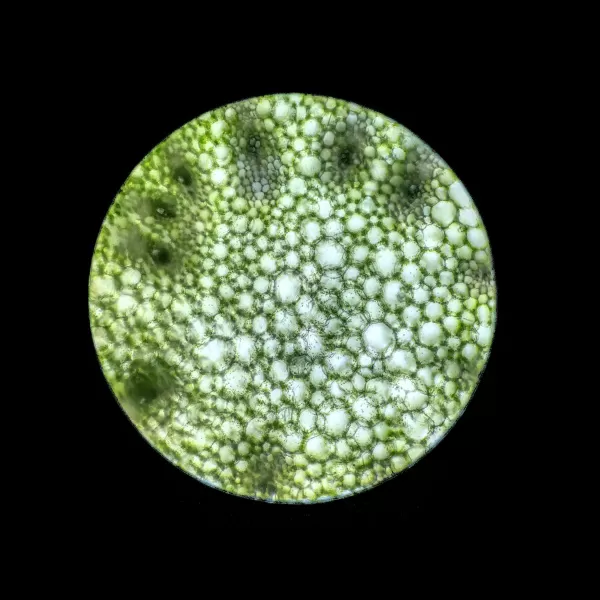
It wasn’t until the early 21st century that a team of scientists at Shanghai Jiao Tong University discovered that cyanobacteria—the ancient organisms responsible for the origin of life on Earth—held the potential to revolutionize this system.


Over the course of 15 years, a completely new technological pathway—from “air” to “materials”—was fully realized in Shanghai, China.


Beginning with Vision, Achieved Through Dedication: The Journey of Two Generations of Scientific Excellence

First-Generation Insights: The Commitment to Bio-based Materials at Shanghai Jiao Tong University's School of Life Sciences

Let’s rewind to the 2000s. While global chemical giants were charging ahead on the petroleum-based path, a research team at Shanghai Jiao Tong University’s School of Life Sciences set out alone on a path rarely traveled. They made a judgment that seemed almost “rebellious” at the time: the future of an economy cannot be built on a greedy reliance on fossil resources.


Thus, driven by their original conviction—“to build an independent industrial future for China through biomanufacturing”—this team resolutely embarked on the path of developing bio-based materials, despite widespread skepticism and confusion.


Over the course of more than 20 years, through persistent dedication and continuous breakthroughs, they have established a vital industrial strain library for lactic acid and polylactic acid (PLA) production, along with a comprehensive industrial chain production technology system for China. As one of the key founding forces of China’s lactic acid industry chain, the School of Life Sciences at Shanghai Jiao Tong University has laid a solid technological and industrial foundation for China’s bio-manufacturing sector.
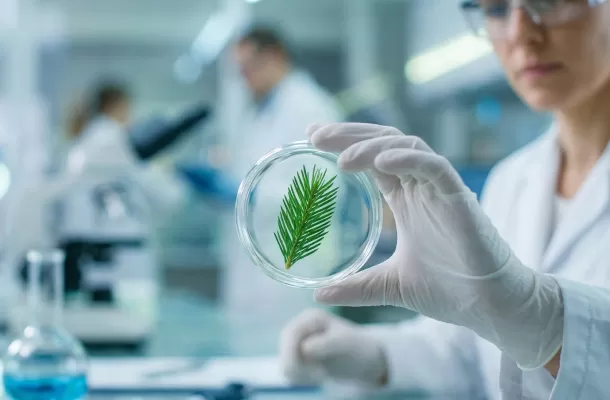

The Second-Generation Disruption: SYNLIFE Technology's ''Negative Carbon'' Manifesto

Building on cutting-edge scientific research and industrial infrastructure, SYNLIFE Technology has not settled for existing approaches but has instead posed an even more “radical” question:


Can we break free from our dependence on sugar (and arable land)? Can we “grow” materials directly from the air, just like the Earth’s earliest life forms—cyanobacteria?


SYNLIFE Technology has deeply integrated cutting-edge AI with synthetic biology to pioneer “intelligent metabolic reprogramming” technology. In 2022, its team achieved the world’s first “one-step direct synthesis of polylactic acid from carbon dioxide,” which was published as a cover article in the top-tier international journal *Green Chemistry*.


This also marks the world’s first proposal of “carbon-negative”—a completely new approach to carbon-negative manufacturing. It no longer relies on oil and coal but uses carbon dioxide itself as the starting material. This is not an improvement; it is a complete reconfiguration of the manufacturing pathway. This means that manufacturing is no longer a linear process of consumption but becomes part of the Earth’s cycle. SYNLIFE Technology believes that carbon-negative technology can not only address the issue of humanity’s sustainable survival on Earth but also play a crucial role in future space exploration and interstellar migration.
Research Timeline · From Air to Plastic

Shanghai | Shanghai Jiao Tong University
2007

Professor Xu Ping's team launched research on cyanobacterial metabolism and genetic engineering, systematically establishing the foundational capabilities for the engineering of photosynthetic microorganisms.

Shanghai
2015

The team first proposed and validated the concept of the ''cyanobacterial photosynthetic cell factory'' : Synthesizing target chemicals using only light and CO₂, without relying on petroleum or sugar sources.

Shanghai
2018

By restructuring carbon flux distribution and electron transport pathways within cyanobacteria, photosynthetic conversion efficiency was significantly enhanced, marking the transition of cyanobacteria from a research model to a sustainably operating engineered system.

China
2021

Leading media outlets extensively covered this research approach, describing it as “the use of synthetic biology to transform cyanobacteria into building blocks for next-generation materials.”

International
2022

The team published their findings in *Green Chemistry*, providing the first systematic demonstration that the biodegradable plastic PLA can be autotrophically synthesized in cyanobacteria, with carbon derived entirely from CO₂.

China
2022

Professors Xu Ping and Tao Fei jointly founded SYNLIFE, dedicated to the industrialization of carbon-negative technologies.

Singapore
2023

This research initiative has been highly recognized by the Singaporean government and has been incorporated into Singapore’s support system for cutting-edge synthetic biology and sustainable materials research and industry. It has received public research funding and access to platform resources to facilitate the technology’s progression toward large-scale implementation and industrialization.

As a result, while most companies and organizations around the world are still debating how to reduce emissions, SYNLIFE has already gone a step further—making plastic itself part of the carbon-negative process.

CO₂ Capture and Utilization
Synthesizing High-Performance Bio-based Materials Within Cells
Applying These Materials to Real-World Products
Returning to the Natural Cycle at the End of Their Lifecycle
Carbon Negative

SYNLIFE Sipu Technology plans to achieve the low-cost commercialization of carbon-negative bio-based materials by 2030.


In the future, all products launched under the SYNLIFE® brand will contain “carbon-negative raw materials” derived from the carbon-negative biomanufacturing platform.


Whether it be packaging, daily necessities, textiles, home goods, or new product forms yet to be invented, all products will return to the wisdom of human survival accumulated over thousands of years.

From nature, for humanity, back into the cycle.
Created from Life, in Harmony with Life

Created from Life, in Harmony with Life

Only when materials are born from living systems can industry truly have a sustainable future.

Switch to SYNLIFE.
Switch to SYNLIFE.
Power Your Products with Bio-Based Materials.
We use cookies to optimise and personalise your experience, but you can choose to opt out of non-essential cookies.
To find out more, read our Privacy Policy
Reject All
Accept All