Two-Dimensional Framework
We have divided material evaluation into two distinct dimensions, using blue and green five-star ratings to represent the health and environmental impact ratings of plastic materials, respectively. Products manufactured using materials certified under this dual-five-star evaluation system will be authorized to display the certification label on their surfaces.
Human Safety
This dimension focuses on the potential impact of materials on human health in real-world usage scenarios. The evaluation emphasizes not whether a risk has already occurred, but whether there are foreseeable uncertainties.
Environmental Impact
This dimension examines the long-term burden and external impacts on the environment throughout the material’s entire lifecycle—from resource extraction and use to end-of-life disposal.
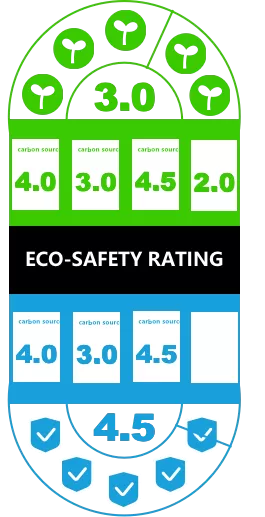
The material health rating comprehensively evaluates the following four aspects:
Distinction Between Virgin and Recycled Materials
Whether the composition is clear and traceable
Whether there are any mixed materials or uncontrolled sources
In this aspect, recycled materials typically face stricter evaluation due to the complexity of their composition.
Whether materials may generate microplastics that can be ingested or inhaled by humans during use, wear, or aging
Whether such particles have the potential to persist in the environment or bioaccumulate
Whether there are pathways of human health impact that have not yet been fully elucidated
The World Health Organization (WHO) has repeatedly noted that significant scientific uncertainty remains regarding the long-term effects of microplastics on the environment and human health, and that they should be treated with caution as a potential health risk.
Does it contain chemicals that are subject to specific regulations or are of high concern
Does it comply with major international regulations and the requirements of its intended use
Are there any controversial risks, such as endocrine disruption or chronic toxicity
Stability of Materials During Use
Identifying Risks Associated with Chemical Changes Under the Influence of Heat, Light, Time, and Other Factors
Are There Any Toxicological or Aging Risks That Have Not Been Fully Studied
Are the Byproducts of Degradation or Post-Use Clearly Identified
The Environmental Friendliness Rating is based on the full life cycle of materials and focuses on the following aspects:
Derived from Renewable Resources
Percentage of Bio-based Carbon
Dependence on Fossil Resources
Recyclability
Proportion That Can Be Effectively Sorted and Recycled in Practice
Can it truly be converted into a substance within the natural cycle
Or does it merely undergo physical fragmentation
In this context, plastic materials that disintegrate but do not degrade will be subject to stricter evaluation.
Performance degradation following recycling or reuse, and the number of times the material can be recycled and reused
The additional energy, resources, and carbon emissions required to recycle the material
In this dimension, materials that contribute to a virtuous cycle will receive higher scores, while those that consume unreasonable amounts of resources merely to delay disposal will face stricter evaluation.
Products that meet the following criteria may apply to use this voluntary label:
The primary materials used in the product have undergone a two-dimensional assessment.
The assessment results for the materials fall within the grade range permitted for display under the system.
The material formulation, source, and usage remain consistent, with no substantial changes.
The material assessment was conducted independently based on established methodologies, and the results were not adjusted based on brand, product category, or market application.
Submit material formulations, sources, and relevant technical documentation
Conduct a two-dimensional assessment and confirm the rating in accordance with the system methodology
Upon successful assessment, grant authorization to use the label corresponding to the designated rating
Certification labels may be used on products manufactured with materials that have passed the two-dimensional assessment to indicate their material grade information.
Applicants must ensure that the primary materials used in labeled products are consistent with the evaluated materials in terms of formulation composition, raw material sources, and key processing conditions.
SYNLIFE reserves the right to conduct random sampling and verification of labeled products in circulation; if it is found that the actual materials used do not match the evaluated materials, SYNLIFE has the right to revoke the applicant’s eligibility to use the label and to publicly disclose the relevant circumstances.
The label must not be split, rearranged, or altered in terms of proportions or color; it must not be used to imply the product’s overall performance, absolute safety, or environmental outcomes, nor must it be used for endorsement or comparative advertising unrelated to this system.
*Explanation of Ratings and Scope of Responsibility
This rating system is based on currently available regulations, testing methods, and scientific consensus, and is intended to facilitate relative comparisons between materials and promote transparency. The rating results do not replace regulatory compliance requirements, nor do they constitute a guarantee of health or environmental outcomes under specific application conditions.