
In 2026, supermarkets and fresh food retailers are navigating a packaging transition that is simultaneously driven by regulatory pressure, ESG reporting requirements, and consumer expectation. Single-use plastic reduction targets, extended producer responsibility legislation, and corporate sustainability commitments have made the fresh produce aisle — one of the highest-volume plastic packaging areas in any supermarket — a focal point for visible, measurable plastic reduction action. And at the center of that challenge is cling film: the thin, transparent, food-contaminated wrapping that covers millions of produce trays, deli items, bakery products, and prepared food packs every day — and that is almost impossible to recycle in real retail environments.
Compostable cling wrap offers a practical and commercially viable pathway out of this bottleneck. Made with food safe resin rather than conventional PVC or PE plastic, compostable cling wrap can replace traditional film across fresh produce, deli counters, bakery sections, and prepared food displays while maintaining the transparency, cling performance, freshness protection, and operational compatibility that supermarket fresh food operations require. Synlife's ZeRoll® biodegradable plastic cling film is positioned as a next-generation compostable food wrap — made with a food-contact-safe eco-friendly resin, compliant with China GB 4806.7, U.S. FDA, and EU food-contact safety standards, and designed to support freshness preservation, home composting standards, and the ESG goals that supermarket procurement teams are under increasing pressure to demonstrate.
This guide covers the complete picture for supermarket procurement, sustainability, and operations teams: why conventional PVC and PE cling film has become an ESG bottleneck that retailers cannot solve through recycling alone, what compostable cling wrap is and why food safe resin is the foundation of a credible food-contact safety claim, how the film's freshness protection and transparency performance translate into shelf appeal and produce quality outcomes, how compostable cling wrap compares to PVC, PE, PLA, and paper-based alternatives, and what procurement and operational practices support a successful retail rollout. Secondary keywords relevant to this decision — wholesale compostable cling wrap, biodegradable film for retail, sustainable fresh produce packaging, and eco-friendly PVC alternative — are addressed throughout.
The business case for switching to Compostable cling wrap starts with a clear understanding of why conventional cling film — despite being technically recyclable in some contexts — creates a plastic waste problem that supermarkets cannot solve through recycling infrastructure alone.
Conventional PVC and PE cling film is one of the most difficult plastic packaging formats to recycle in real retail environments. The film is thin and lightweight, which means it jams sorting machinery at materials recovery facilities. It is almost always food-contaminated after use — covered in produce moisture, meat juices, or food residue — which disqualifies it from most plastic film recycling streams that require clean, dry material. It is typically mixed with other packaging materials — foam trays, paper labels, cardboard backing — that further complicate separation. And the volumes generated in a busy supermarket fresh food department are enormous — hundreds of rolls consumed per week across produce, deli, bakery, and prepared food sections.
The practical result is that the vast majority of conventional cling film used in supermarket fresh food operations ends up in general waste rather than recycling — making it a direct contributor to the single-use plastic waste volumes that retailers are under increasing pressure to reduce through ESG commitments, extended producer responsibility schemes, and customer-facing sustainability communications.
The alternative to replacing cling film with a compostable alternative — eliminating cling film entirely and switching to rigid containers, paper wraps, or other packaging formats — creates significant operational and commercial challenges for fresh food retailers. Cling film provides a combination of transparency, flexibility, freshness protection, and operational speed that rigid containers and paper wraps cannot fully replicate for all fresh produce categories. Leafy greens, cut fruit, berries, deli trays, and prepared food packs all benefit from the transparent, conforming, moisture-managing properties of cling film in ways that alternative formats cannot match without significant product presentation or shelf-life trade-offs.
Compostable cling wrap made with food safe resin addresses this challenge by providing the functional performance of conventional cling film — transparency, cling, freshness protection, machine compatibility — while replacing the non-biodegradable plastic with a material that can biodegrade under composting conditions, supporting the plastic reduction narrative that supermarket ESG programs require without compromising the fresh food presentation and operational efficiency that retail operations depend on.
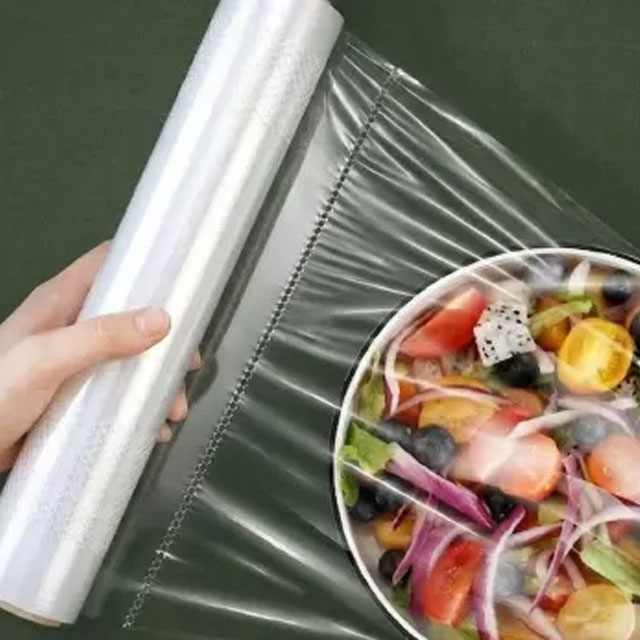
Understanding what compostable cling wrap is — and why the food safe resin used in its production is the most important material specification for supermarket procurement teams to verify — is essential for buyers evaluating biodegradable film for retail applications.
Compostable cling wrap is a flexible food wrapping film designed to replace conventional plastic cling film while offering biodegradability or compostability under defined conditions. It is used to wrap fresh produce, prepared foods, bakery items, catering trays, bowls, and retail food packs — the same applications as conventional cling film, but with a material composition that supports end-of-life biodegradation rather than persistent plastic waste.
Synlife's ZeRoll® is positioned as a biodegradable plastic cling film made without intentionally added plasticizers and formulated from biodegradable resin rather than conventional PVC or PE — a material positioning that directly addresses the three most significant concerns that supermarket sustainability teams have about conventional PVC cling film: plasticizer migration into food, microplastic generation during degradation, and non-biodegradable plastic waste at end of life.
For supermarket fresh food applications, the film material must be safe for direct contact with fruits, vegetables, cooked foods, and ready-to-eat items — without migration of harmful substances into the food. This food-contact safety requirement is the most fundamental specification for any cling film used in retail fresh food operations, and it is the specification that most clearly distinguishes a credible compostable cling wrap from a product that is biodegradable in name but not safe for food contact in practice.
Synlife states that ZeRoll® is made with a food-contact-safe eco-friendly resin and complies with China GB 4806.7, U.S. FDA, and EU food-contact safety standards — with 18 plasticizer tests showing non-detectable results. This documentation provides the food-contact safety foundation that supermarket procurement teams need to confidently specify the film for direct produce contact applications.
| Feature | Retail Significance |
| Food safe resin | Supports direct food-contact confidence across all fresh food categories |
| No intentionally added plasticizers | Addresses the primary food safety concern with conventional PVC cling film |
| Biodegradable material design | Supports clean biodegradation claim for composting and waste communication |
| Biodegradable plastic positioning | Enables credible ESG plastic reduction narrative for retail communications |
| FDA, EU, and GB 4806.7 compliance | Provides documentation for procurement audits and regulatory compliance |
| Commercial roll format | Supports high-frequency use in retail and catering environments |
The commercial value of compostable cling wrap for supermarket fresh food operations depends not just on its sustainability credentials but on its ability to deliver the freshness protection, transparency, and operational performance that produce quality and shelf appeal require. A film that is biodegradable but reduces shelf life, reduces visual appeal, or disrupts wrapping machine operations will not achieve the retail adoption that supermarket ESG goals require.
Oxygen barrier control is the freshness protection mechanism that most directly affects produce shelf life. By reducing oxygen ingress through the film, compostable cling wrap slows the oxidation and discoloration processes that cause cut fruit to brown, leafy greens to yellow, and prepared foods to deteriorate. Synlife states that ZeRoll® blocks oxygen ingress while maintaining moderate moisture permeability to help reduce oxidative discoloration and extend preservation time — a performance characteristic that directly supports the shelf-life extension that reduces food waste and improves produce department profitability.
Moisture permeability balance is the freshness management challenge that distinguishes produce wrapping from other food packaging applications. Fresh produce needs moisture control that prevents both excessive moisture retention — which causes condensation, mold, and bacterial growth — and excessive moisture loss — which causes wilting, weight loss, and visual deterioration. The moisture permeability of the film must be matched to the specific produce category being wrapped, and buyers should validate film performance for their specific product range before full rollout.
Cling and edge stability are the operational performance characteristics that determine whether the film can be used effectively in fast-paced retail wrapping operations. For retail trays and produce packs, good adhesion prevents edge lifting, air gaps, and poor presentation that reduce shelf appeal and customer confidence. Synlife highlights perfectly adhering performance with no edge lifting and long-lasting sealing — characteristics that support the consistent, professional presentation that supermarket fresh food departments require.
Transparency and gloss for shelf display are the visual performance characteristics that most directly affect customer purchase decisions in the fresh produce aisle. High clarity allows shoppers to see the color, freshness, and texture of the product through the wrap — a critical factor for premium produce categories including berries, leafy greens, cut fruit, and specialty vegetables where visual quality is the primary purchase driver. A compostable cling wrap that reduces transparency or gloss compared with conventional PVC film will reduce the shelf appeal of wrapped produce and may affect sales performance.
Machine compatibility for retail workflow is the operational requirement that most frequently determines whether a compostable cling wrap can be adopted at scale in a supermarket environment. Automatic tray wrapping machines, stretch wrapping systems, and high-frequency produce packaging lines are designed and calibrated for specific film tension, tear resistance, cling behavior, and roll dimensions. Synlife offers roll formats including 30 cm × 30 m, 30 cm × 60 m, and a 30 cm × 150 m commercial size designed for high-frequency commercial use — but supermarkets should test film performance on their specific wrapping equipment before committing to a full rollout.
The selection of the right fresh produce packaging format for a supermarket ESG program involves evaluating the sustainability credentials, food-contact safety, freshness performance, operational compatibility, and total cost of ownership of the available options — and understanding where compostable cling wrap provides the strongest combination of plastic reduction value and practical retail performance.
Compostable cling wrap provides the strongest combination of plastic reduction credentials, food-contact safety documentation, freshness protection performance, and operational compatibility for supermarket fresh produce applications. Its transparent, flexible, conforming format matches the functional performance of conventional cling film more closely than any alternative packaging format — making it the most practical eco-friendly PVC alternative for the broad range of fresh produce wrapping applications that supermarket operations require. The primary procurement requirements are verifying compostability certification for the destination market, confirming machine compatibility with the specific wrapping equipment used, and validating shelf-life performance for the specific produce categories being wrapped.
PVC cling film provides strong cling performance and clear appearance but is under increasing regulatory and ESG pressure in major markets. Its plasticizer content, recycling difficulty, and non-biodegradable waste generation make it an increasingly high-risk long-term procurement choice for supermarkets with public plastic reduction commitments.
PE cling film is more widely used than PVC in many markets due to lower plasticizer concerns, but shares the recycling difficulty and non-biodegradable waste generation challenges of PVC in food-contaminated retail applications.
PLA film offers bio-based positioning and compostability credentials but has limited heat resistance — typically not suitable for applications involving warm food — and requires industrial composting infrastructure for degradation, which may not be available in all markets.
Paper-based wrap provides a natural appearance and printable surface for dry bakery, deli, and sandwich applications but offers limited transparency — making it unsuitable for fresh produce applications where visual quality is a primary purchase driver.
Reusable containers offer waste reduction potential for closed-loop retail systems but require washing infrastructure, logistics management, and customer return behavior that are difficult to implement at scale in conventional supermarket fresh food operations.
| Packaging Option | Transparency | Freshness Protection | ESG Credentials | Machine Compatibility |
| Compostable cling wrap | High | Strong | Strong — biodegradable and compostable | Requires testing per equipment |
| PVC cling film | High | Strong | Low — plasticizer and recycling concerns | Established |
| PE cling film | High | Good | Low — recycling challenges | Established |
| PLA film | High | Moderate | Moderate — composting infrastructure required | Requires testing |
| Paper-based wrap | Low | Moderate | Moderate — depends on coating | Limited to dry applications |
Compostable cling wrap delivers the most ESG value for: supermarket fresh produce departments where high-volume cling film use creates the largest plastic waste reduction opportunity, organic food retailers where the biodegradable plastic material story aligns with the brand's natural and sustainable positioning, deli counters where food-contact safety documentation is required for ready-to-eat food applications, bakery sections where transparent wrapping maintains product visibility while supporting plastic reduction, prepared food counters where freshness protection and presentation quality are both critical, catering kitchens and central kitchens where commercial roll formats support high-frequency wrapping operations, and food delivery preparation centers where sustainable packaging is a brand differentiator.
Sourcing wholesale compostable cling wrap for supermarket fresh food operations requires systematic pre-procurement evaluation of both film performance and operational compatibility — and handling and storage practices that protect film quality and food-contact safety through the supply chain and retail operation.
Before placing a wholesale order for compostable cling wrap, supermarket procurement and sustainability teams should confirm the following:
Confirm that the film is made with food safe resin and request food-contact safety documentation — FDA, EU, and GB 4806.7 compliance reports — for the specific film product being ordered
Confirm plasticizer test results — request documentation showing non-detectable plasticizer levels rather than accepting a general plasticizer-free claim without supporting test data
Confirm compostability certification — home composting or industrial composting — and verify that the certification matches the composting infrastructure available in the destination market
Confirm transparency and gloss performance — request film samples for visual evaluation against the current PVC or PE film being used, and evaluate appearance on the specific produce categories being wrapped
Confirm cling and edge sealing performance — test the film on representative produce trays and packaging formats before committing to a full rollout
Confirm machine compatibility — test the film on the specific automatic wrapping machines, tray wrapping systems, and packaging lines used in the store or distribution center, evaluating film tension, tear resistance, cling behavior, and roll fit
Confirm roll size availability — verify that the commercial roll formats available match the requirements of the wrapping equipment and the volume of the retail operation
Confirm shelf-life performance for the specific produce categories being wrapped — request test data or conduct in-store trials comparing shelf life of produce wrapped in compostable cling wrap versus the current film
Confirm storage conditions and shelf life of the film rolls — compostable films may have specific storage requirements that differ from conventional plastic film
Confirm disposal communication support — request point-of-sale materials, labeling guidance, and customer communication resources that explain the compostability credentials of the film to shoppers
Store film rolls in a cool, dry, clean area away from direct sunlight and excessive heat — compostable films may be more sensitive to temperature and humidity during storage than conventional plastic films
Keep rolls sealed in their original packaging before use to prevent dust contamination and moisture absorption
Test film tension and tear behavior before loading onto automatic wrapping machines — compostable films may require machine setting adjustments compared with conventional PVC or PE film
Train produce department staff on correct wrapping pressure, tearing method, and roll handling for the specific compostable film being used — incorrect handling can cause film tearing, poor edge sealing, or inconsistent wrapping quality
Use suitable labels that are compatible with the compostability claims of the film — labels with non-biodegradable adhesives may affect the compostability of the wrapped package
Separate compostable packaging from conventional plastic waste in back-of-store waste management where composting infrastructure is available
Communicate disposal instructions clearly to customers through shelf labels, packaging information, and store sustainability communications
Monitor produce shelf life and customer feedback after rollout — track any changes in produce quality, customer complaints, or wrapping machine performance compared with the previous film
Keep food-contact safety documentation, compostability certification, and plasticizer test reports for ESG audit and regulatory compliance purposes
For supermarkets, ESG progress must be visible where customers shop — in the produce aisle, at the deli counter, and across the fresh food packaging that shoppers interact with every day. Compostable cling wrap gives retailers a practical, scalable, and commercially viable way to reduce dependence on conventional PVC and PE film while protecting freshness, maintaining transparency and shelf appeal, and supporting the food-contact safety standards that fresh food operations require. With the right film performance, machine compatibility testing, and disposal communication, retailers can improve both sustainability outcomes and customer experience simultaneously — turning a packaging compliance challenge into a brand differentiation opportunity.
Synlife's ZeRoll® biodegradable plastic cling film — made with food safe resin, compliant with FDA, EU, and GB 4806.7 food-contact standards, and designed for freshness preservation and commercial roll use — is a strong candidate for supermarkets seeking a scalable biodegradable film for retail and a credible eco-friendly PVC alternative that can be deployed across fresh produce, deli, bakery, and prepared food applications.
Contact Synlife today to discuss your supermarket packaging goals, produce categories, automatic wrapping machine requirements, food-contact compliance needs, compostability documentation, and commercial roll purchasing plan. The Synlife team can help you evaluate ZeRoll® for your specific retail application and provide the samples, technical documentation, and commercial support that a successful sustainable packaging rollout requires.
Compostable cling wrap is a flexible food wrapping film made with biodegradable or compostable resin rather than conventional PVC or PE plastic. It provides similar transparency, cling, and freshness protection performance to conventional film while offering end-of-life biodegradation under composting conditions — supporting plastic reduction goals without compromising fresh food presentation or protection.
Food safe resin ensures that the film is safe for direct contact with fresh produce, prepared foods, and ready-to-eat items without migration of harmful substances into the food. For supermarket applications, food-contact safety documentation — FDA, EU, and GB 4806.7 compliance — is a non-negotiable procurement requirement that must be verified before deployment.
It may be compatible, but supermarkets should test the specific film on their wrapping equipment before full rollout. Film tension, tear resistance, cling behavior, roll dimensions, and machine settings may all require evaluation and adjustment compared with the conventional film currently in use.
It replaces non-biodegradable PVC and PE film with a biodegradable plastic alternative, reducing the single-use plastic waste generated by fresh food packaging operations. It provides a visible, shelf-level plastic reduction action that supports ESG reporting, customer communication, and retail brand differentiation in sustainable packaging.
Buyers should confirm food-contact safety documentation, plasticizer test results, compostability certification type and standard, transparency and gloss performance, cling and edge sealing quality, machine compatibility with specific wrapping equipment, commercial roll size availability, shelf-life performance for target produce categories, storage requirements, and disposal communication support.