

Siyuan Zhiyuan, Striving for New Strengths.
In 2026, Shanghai Jiao Tong University (SJTU) celebrates its 130th anniversary. For 130 years, the university has carried forward its heritage and nurtured generations of talent. From this prestigious institution have emerged not only world-renowned academic masters and engineering giants, but also countless industrial pioneers and sci-tech innovators dedicated to real-world industry and leading technological transformation.
Starting today, SJTU New Shangyuan launches the special column "Visiting 100 SJTU Sci-Tech Enterprises", documenting the mission and commitment of SJTU alumni to serve the nation through text and video.
"If controllable nuclear fusion can bring humanity energy freedom, then biomanufacturing can bring humanity material freedom,"
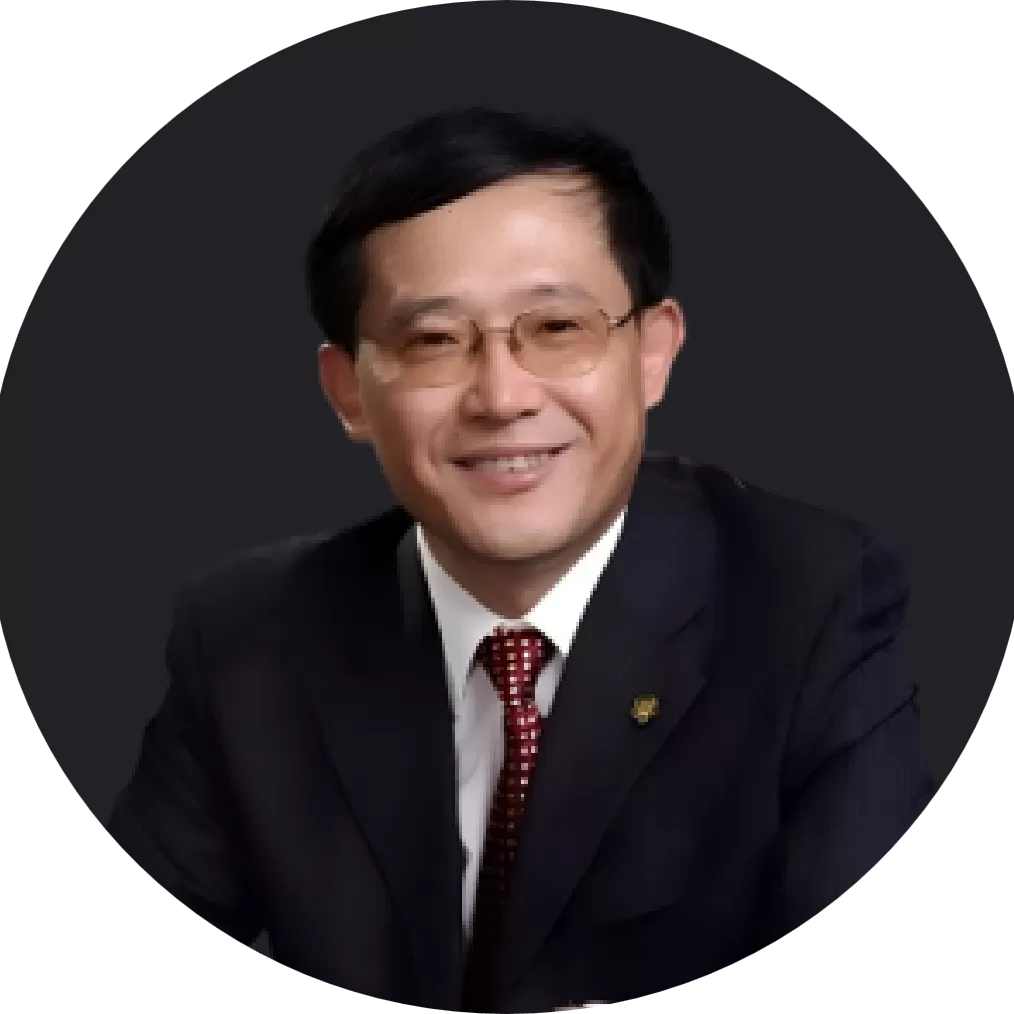
Tao Fei, Researcher at the School of Life Sciences and Biotechnology, SJTU, and Founder & Chairman of Sipeng Technology, told SJTU New Shangyuan, his eyes shining with the romance of a scientist and the passion of an entrepreneur.
With explicit mention in the 15th Five-Year Plan, biomanufacturing has once again become a hot topic online and a focal point in the capital market. Yet Tao Fei believes that bringing biomanufacturing to reality is neither out of reach nor achievable overnight.
Industry insiders hold that strategically, biomanufacturing is no less important to China than integrated circuits. It will be another strategic track for China to "overtake on the curve" following new energy, with an underlying industrial scale of no less than one trillion yuan.
Given China’s natural resource endowment of "poor oil, little gas, and relatively abundant coal", the rapid rise of the new energy industry has significantly eased the country’s external dependence on traditional energy sources such as petroleum. However, in the petrochemical sector, the pattern long dominated by multinational giants—similar to the auto industry—still persists: core technologies and intellectual property barriers are highly concentrated, making breakthroughs extremely difficult. Against this backdrop, biomanufacturing, with its innovative potential, is poised to become a strategic new track for China to achieve "curve overtaking" in high-end manufacturing.
According to forecasts by the Organisation for Economic Co-operation and Development (OECD), at least 20% of global petrochemical products will be replaced by bio-based products by 2030, corresponding to a market space of over 800 billion US dollars.
"Bio-based materials have broad prospects," Tao Fei noted. In terms of development potential, biomanufacturing is expected to reach a scale comparable to the chemical industry in the future. He particularly emphasized that biomanufacturing is not an isolated industry; its core value lies in integration—deep integration with the existing industrial system. Final products must be deeply embedded in current industrial chains, rather than existing independently outside the industrial ecosystem.
In 2022, Tao Fei co-founded Sipeng Technology with Xu Ping, another founder of the company—Foreign Member of the National Academies of Sciences, Engineering, and Medicine (USA), Distinguished Professor at SJTU. Within three years of its establishment, the company has secured investments from Benca Capital, CAS Innovation, SDIC Innovation & Investment, Rugao Science and Technology Venture Capital, SJTU Tech Ceyuan Fund, among others, with total financing exceeding 100 million yuan.
01
Rewind to 2022, during Shanghai’s COVID-19 lockdown. In a laboratory at SJTU, Professor Xu Ping, co-founder of Sipeng Technology, voluntarily stayed on campus, spending dozens of unforgettable days and nights in the lab. What the professor personally guarded was not precision instruments, but microorganisms that "consume" carbon dioxide—the synthetic biology chassis painstakingly developed by Sipeng’s founding team over 16 years: cyanobacteria (blue-green algae).
Approximately 3.5 billion years ago, cyanobacteria emerged as Earth’s first photosynthetic, autotrophic single-celled life. Their existence transformed Earth from an anaerobic to an aerobic environment, laying the groundwork for the evolution of aerobic life—arguably making them the cornerstone of the origin of advanced life on Earth. For Sipeng, the cyanobacteria cultivated over 16 years are invaluable.
Tao Fei stated that cyanobacteria are one of the ideal cell factories for carbon-negative material production. Through redesign and engineering, they can use carbon dioxide as a feedstock to efficiently produce materials, fuels, high-value compounds, and even pharmaceuticals, achieving the vision of "creating everything through biology".
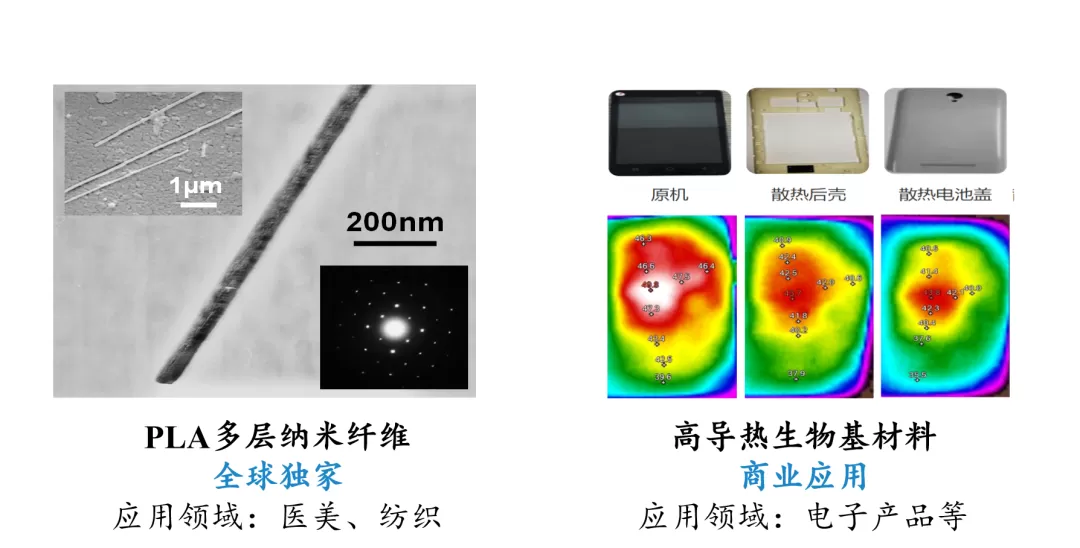
Shortly before the pandemic, the R&D team led by Xu Ping and Tao Fei pioneered the world’s first direct synthesis of biodegradable plastic polylactic acid (PLA) using carbon dioxide as a raw material, providing a new paradigm for "carbon-negative production" in the materials industry.
Over the preceding 16 years of R&D, Tao Fei explained that the team had successfully developed and produced various products, including small-molecule compounds such as glycerol, DHA, lactic acid, propylene glycol, resveratrol, and a variety of aromatic compounds. The team initially targeted "unique high-value products"—goods with high value due to lower technical barriers for cyanobacterial production, yet typically smaller market sizes.
The successful development of PLA proved the feasibility of cyanobacterial applications in materials. Such products feature large volumes, massive market scales, lower cost sensitivity than energy products, and both economic and social benefits, making them an ideal path for the commercialization of synthetic biology technology.
In May 2022, with support from SJTU during Shanghai’s lockdown, Xu Ping and Tao Fei founded Sipeng Technology.

Sipeng’s ultimate goal is to apply carbon-negative synthetic biology technology to the sustainable manufacturing of key bulk products, driving carbon reduction and pollution abatement.
02
First generation: Primarily uses grain as feedstock to synthesize biofuels.
Second generation: Shifts to non-grain biomass, including crop straw, bagasse, etc.
Third generation: Utilizes atmospheric carbon dioxide as feedstock, directly converting inorganic carbon into high-value organic chemicals and fuels.
"The greatest cost-reduction logic lies in carbon source iteration," Tao Fei explained to SJTU New Shangyuan.
Carbon sources account for over 50% of the total cost in biomanufacturing. For first-generation biomanufacturing, grain costs are largely fixed, leaving limited room for cost reduction through technical improvements. This mirrors the bottleneck facing China’s chemical industry today: most costs stem from petroleum and derivative feedstocks. With low domestic petroleum self-sufficiency, the chemical industry faces triple pressures: cost volatility, IP barriers from multinational giants, and the global green transition.
Second-generation biomanufacturing relies mainly on cellulose feedstocks such as straw. While costs can be reduced compared to the first generation, feedstock collection, storage, transportation, and processing are vulnerable to climate, seasons, and environmental factors, leading to unstable supply chains.
"First- and second-generation biomanufacturing still compete with humans for grain and with grain for land," Tao Fei noted. Carbon sources have become a key constraint on the development of the biomanufacturing industry. Third-generation synthetic biology, using carbon dioxide as feedstock, is poised to break this bottleneck.
Carbon dioxide is inexhaustible, and its cost can be continuously reduced—even approaching zero—as technology advances. Combined with carbon capture technology, it can turn "carbon-negative intelligent manufacturing" into reality, achieving true sustainable coexistence between human society and nature.
"If controllable nuclear fusion can bring humanity energy freedom, then biomanufacturing can bring humanity material freedom." Tao Fei believes that the industrialization of third-generation biomanufacturing using carbon dioxide will become a revolutionary pillar for human development.
"Sipeng’s future is firmly anchored in third-generation synthetic biology technology powered by carbon dioxide," Tao Fei said, his eyes firm and his voice brimming with the momentum of a pioneer when discussing the company’s strategy.
03
As biomanufacturing moves toward large-scale production, the leap from lab-scale gram-level output to industrial-scale ton-level production is a "valley of death" for many enterprises. Tao Fei believes that the true value of biomanufacturing technology can only be realized through industrialization.
How has Sipeng crossed the "valley of death" from lab trials to industrial production?
Technically, Sipeng has built an exclusive industrial chassis cell bank. Through intelligent cell factory design algorithms and AI-empowered full-chain synthetic biology, the company accelerates the construction and iteration of engineered strains, breaking core biomanufacturing processes into standardized assembly lines—greatly boosting R&D efficiency.
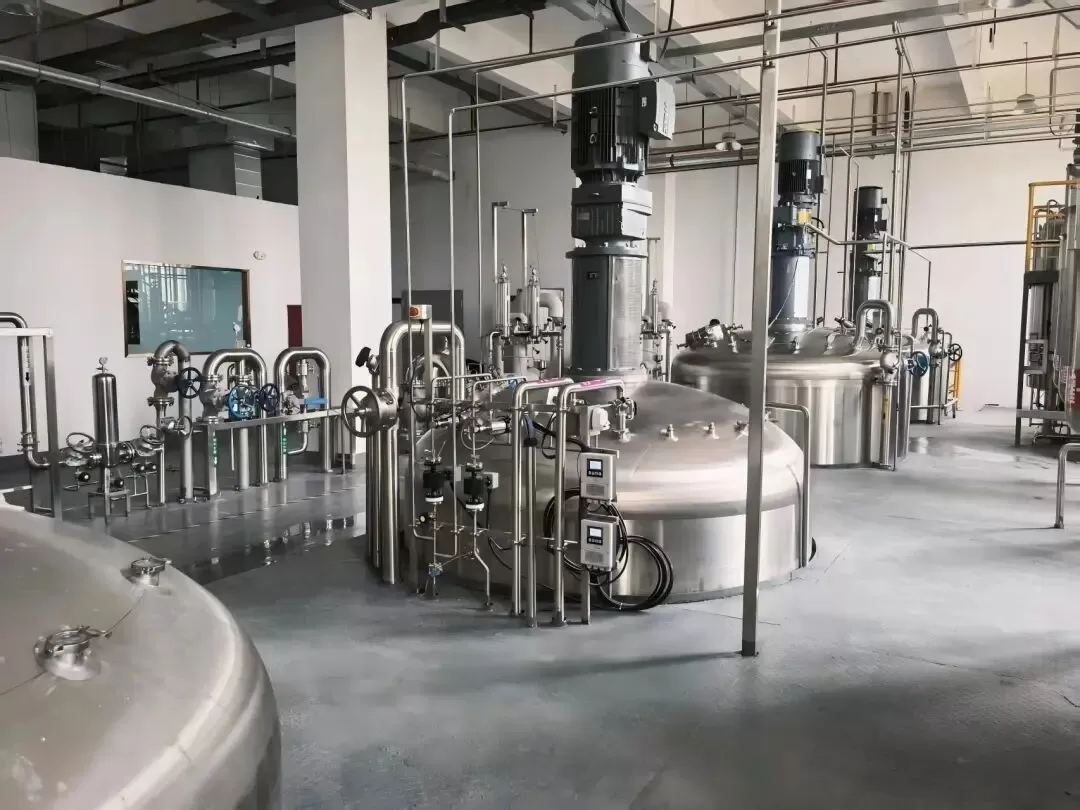
Successful shake-flask experiments are only the beginning; scale-up fermentation is the greatest challenge. Tao Fei recalled that Sipeng once encountered slow growth and reduced product synthesis efficiency in large fermenters, even after processes worked in the lab. Thanks to a "beginning with the end in mind" design philosophy, collective determination, and round-the-clock effort, the team successfully overcame the hurdles from lab to mass production.
Sipeng already maintains a leading edge in cost and performance in the bio-based product market. Tao Fei noted that the future challenge will be to further lower the price of bio-based products to match petrochemical alternatives.
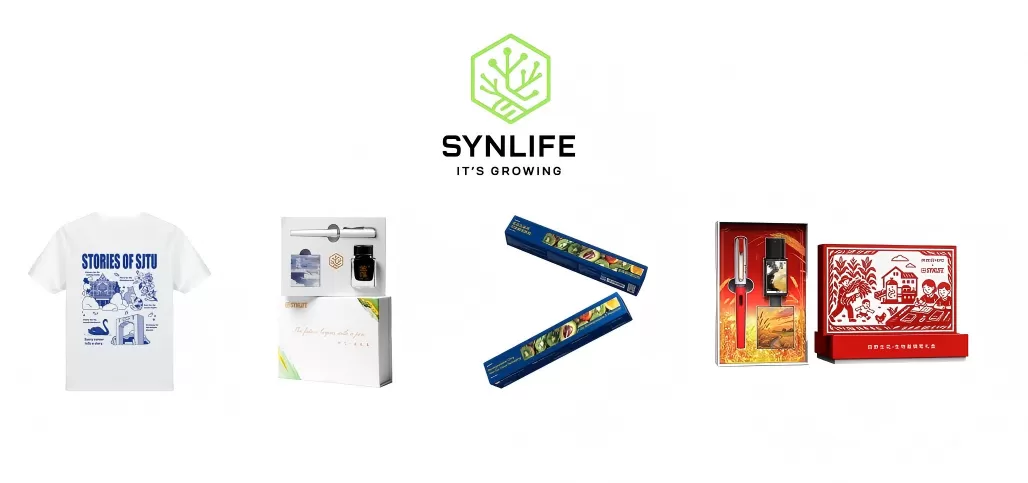
"Customers care most about performance and cost, not the 'bio-based' label," Tao Fei said, showcasing the world’s first high-performance bio-based stationery co-created by Sipeng Technology and HERO Stationery. The product uses Yogtic-05D, a material developed exclusively by Sipeng, combining high bio-based content, superior physical performance, and high transparency. It ensures durability and safety for stationery, while delivering exceptional appearance and texture.
Sipeng also launched a PLA (polylactic acid) yogurt fiber T-shirt in collaboration with SJTU. Its core material—polylactic acid fiber—is derived from renewable resources such as corn and cassava. The T-shirt is not only low-carbon and eco-friendly but also features skin-friendly softness, moisture absorption, breathability, and natural antibacterial and anti-mite properties. Most importantly, it is fully biodegradable via industrial composting, eventually breaking down into carbon dioxide and water under specific conditions, effectively avoiding microplastic pollution from traditional synthetic fiber clothing.
"Biomanufacturing does not replace chemicals—it creates new possibilities, empowering and innovating traditional industries," Tao Fei stated. Sipeng has partnered with Tianwu Technology, another SJTU-affiliated enterprise, to conduct protein modification and design through "AI + computing", further meeting industrial demand for product performance.
He also acknowledged that while academic papers pursue "100-point breakthroughs", industry requires "stable 80-point performance". Going forward, Sipeng will stay grounded, bringing biomanufacturing truly into industry and serving the market.
Tao Fei revealed to SJTU New Shangyuan that Sipeng will soon achieve the industrialization of third-generation synthetic biology from lab to production line, replacing petroleum with carbon dioxide and turning microorganisms into "cell factories".