
Recently, the 2025 Shanghai Key Technology R&D Program officially announced the approved projects for its “Synthetic Biology” initiative. Focusing on cutting-edge fields such as nucleic acid synthesis, biomanufacturing, and healthcare, the program will fund 18 projects totaling 42 million yuan (with 32.1 million yuan allocated in 2025). Among these, Sipeng Technology's project “Creation and Application of an Intelligent Design System for High-Value Cell Factories” was successfully selected, positioning the company as a key driver in advancing the practical implementation of synthetic biology technologies.
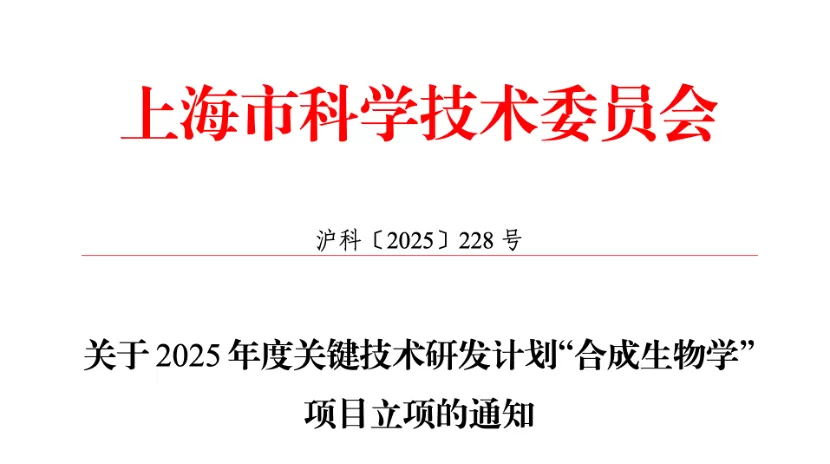
To deepen the implementation of the innovation-driven development strategy and accelerate the construction of a globally influential science and technology innovation hub, the Shanghai Municipal Science and Technology Commission released the 2025 Key Technology R&D Program “Synthetic Biology” Project Application Guidelines in March 2025. This initiative aligns with the “14th Five-Year Plan for Building Shanghai into a Globally Influential Science and Technology Innovation Hub” and the “Shanghai Action Plan for Accelerating Synthetic Biology Innovation and Building a High-End Biomanufacturing Industry Cluster (2023-2025).” The solicitation covers three thematic areas: enabling technologies, applied research, and forward-looking technologies. Each area is subdivided into 3–5 specific directions, aiming to establish a complete innovation chain spanning gene synthesis, metabolic engineering, cell factory construction, and product commercialization. This initiative seeks to achieve major breakthroughs in core synthetic biology technologies and accelerate the translation of research outcomes into practical applications across materials, health, food, environmental protection, and other sectors.

In this application, Sipeng Technology collaborated with Shanghai Jiao Tong University to conduct rigorous planning and scheme design focused on the core direction of “Intelligent Cell Factory Design System Development” within the Enabling Technologies theme. The project was ultimately selected for funding.
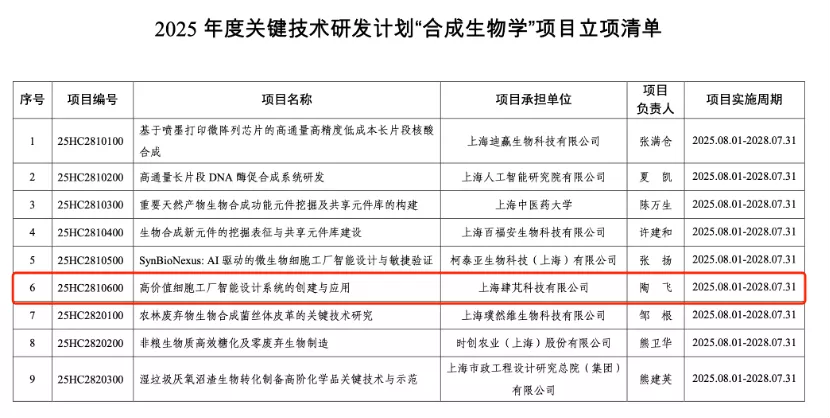
Research Objectives: Develop an AI-driven intelligent cell factory design system. For molecules with lengthy synthetic pathways and high structural complexity, establish high-precision cellular metabolic network models and automated design methods for complex pathways tailored to chassis cells. Eliminate manual intervention in decision-making and design processes, reducing the design cycle for a single biosynthetic pathway to the hour-scale. Achieve the design and experimental validation of novel biosynthetic pathways for five or more high-value complex molecules. Complete pilot-scale upscaling for at least one high-value molecule, with synthesis efficiency surpassing natural biosynthetic rates.
Research Content: Based on artificial intelligence deep learning models and employing bio-retrosynthetic principles, develop efficient design tools for artificial genetic pathways and regulatory networks from starting materials to target compounds. Generate visual design optimization results and perform evaluation scoring. Construct genetic pathways and cell factories to validate design outcomes.
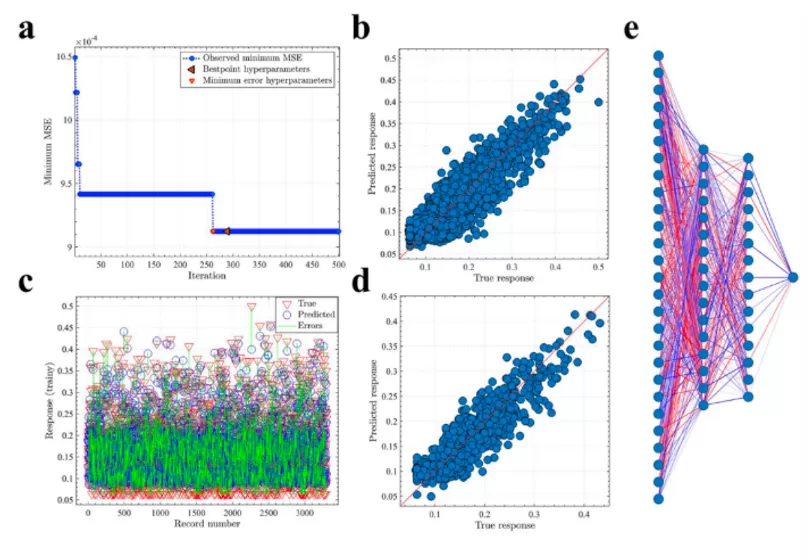
Cellular Metabolic Model Based on Neural Networks and Single-Cell Data
Amidst the global wave of the “Biomanufacturing Revolution,” Sipeng Technology leverages its strengths in platform-based, intelligent, and industrialized synthetic biology to consistently pave the way toward material freedom for humanity through synthetic biology. This selection reaffirms recognition of Sipeng's foundational research capabilities and product innovation. Staying true to our founding mission, we will forge ahead with determination. We look forward to joining more partners in witnessing the infinite possibilities of life.