
August 22, 2025, People's Daily Online reported that China's bio-manufacturing industry is accelerating its development, with an industrial scale reaching trillions of yuan. It has achieved parity with or even surpassed developed countries in multiple emerging fields. Policy support, technological breakthroughs, and industrial synergy serve as core drivers: National ministries jointly cultivate pilot-scale platforms to accelerate commercialization, while local governments enact legislation (such as Changde City's pioneering synthetic bio-manufacturing regulations) to provide talent, funding, and policy safeguards. Future efforts must focus on advancing core technologies, refining standards and market access environments, and channeling patient capital to propel bio-manufacturing's transformation of traditional production models and foster new growth engines.
Biomanufacturing is an emerging production technology that utilizes biological entities such as cells and enzymes as production tools to synthesize or process products through biological processes. So, what is the current state of China's biomanufacturing industry?
At the August 21 press conference for the 2025 China Biomanufacturing Technology Innovation Forum, Zhang Xuejun, Director of the Publicity Center at the Ministry of Industry and Information Technology, stated that China's biomanufacturing sector has accelerated its development in recent years. Original research achievements continue to emerge, industrialization of results is accelerating, and leading enterprises in representative industries are competing for growth. Technological innovation in biomanufacturing has significantly enhanced its role in fostering new industries, business models, and growth drivers.
Currently, China's advanced biomaking industry has reached a scale of one trillion yuan. In emerging fields such as hyaluronic acid and synthetic starch, China has achieved parity with or surpassed developed countries, with cluster effects beginning to emerge.
Wu Fuqing, Secretary-General of Tsinghua University's Center for Synthetic and Systems Biology, stated at the press conference that biomanufacturing possesses the potential to lead the Fourth Industrial Revolution. It will bring about a series of major transformations, including restructuring traditional manufacturing production models, replacing conventional methods of obtaining natural products, and revolutionizing traditional agricultural cultivation and breeding models.
In the pharmaceutical sector, insulin produced using genetically engineered strains offers effective treatment for diabetes patients. In the energy industry, biodiesel derived from vegetable oils or animal fats has gained widespread adoption across numerous countries and regions.
“Moving forward, the optimization and replacement of traditional manufacturing models by biomanufacturing will become a prevailing trend, with continuous market entry of novel achievements and products.” Wu Fuqing recommends that all parties jointly advance the refinement and optimization of relevant standards and systems for new product safety evaluation and market access. This will foster a more tolerant policy environment, enabling more innovative achievements and new products to rapidly enter the market and establish a portfolio of internationally influential new products and standards.
The bio-manufacturing industry inherently possesses knowledge-intensive characteristics. Wu Fuqing noted that currently, developing the bio-manufacturing industry still requires collaborative efforts from all parties to tackle several core technologies.
In June, the Ministry of Industry and Information Technology and the National Development and Reform Commission jointly issued the “Notice on Cultivating Pilot-Scale Capability Development Platforms for Biomanufacturing.” The notice aims to establish over 20 such platforms by 2027, serving more than 200 enterprises and incubating over 400 products.
“The biomanufacturing sector has now entered a critical phase of technological breakthroughs and accelerated industrialization,” Wu Fuqing emphasized. Research institutions should collaborate with innovative enterprises and other stakeholders to establish platforms for R&D, technology transfer, and project incubation, ensuring smoother transitions between laboratory research and pilot-scale validation. Given the lengthy innovation cycles in biomanufacturing, he also recommended attracting more “long-term capital and patient capital” to the field.
Fostering a supportive development environment is equally vital. Zhang Xuejun announced that the 2025 China Biomanufacturing Technology Innovation Forum will showcase disruptive innovations and exemplary commercialization cases in the sector. It will also promote industry awareness, expand biomanufacturing applications, broaden capital visibility, and accelerate innovation outcomes.
Since the start of the 14th Five-Year Plan period, multiple regions have accelerated their布局 in the emerging biomanufacturing sector, increasing financial support, establishing industrial innovation centers, and building high-end biomanufacturing clusters.
Zhou Zhenyu, Mayor of Changde Municipal People's Government, explained that in recent years, Changde has expedited the creation of a national-level pilot zone for biotechnology and biomanufacturing, focusing on driving high-quality development in the synthetic biomanufacturing industry. From January to July this year, the output value growth rate of Changde's synthetic biomanufacturing industrial chain reached 23.5%.
In July, the Standing Committee of the Hunan Provincial People's Congress approved the “Several Provisions of Changde City on Promoting the Development of the Synthetic Biomanufacturing Industry,” marking China's first local regulation specifically designed to foster this sector. Wang Lirui, Deputy Director of the Standing Committee of the Changde Municipal People's Congress, noted that the regulation adopts a “small, fast, and agile” legislative approach, using concise legal provisions to address the most pressing challenges and issues in industrial development.
Wang also explained that the regulations address structural talent shortages through flexible recruitment policies and equity/option incentives. They simultaneously reduce production costs by establishing special funds and investment vehicles, implementing financial support policies, and ensuring land and energy supply.
Shanghai has also spared no effort in advancing its bio-manufacturing industry. Under the framework of the Action Plan for Accelerating Synthetic Biology Innovation and Building a High-End Bio-Manufacturing Industry Cluster in Shanghai (2023–2025), the city provides multi-dimensional policy support for the sector:
In terms of talent, leveraging innovation platforms and major projects, the city is fully committed to attracting top-tier scientists, engineers, and other high-level professionals. It has established an efficient recruitment and service support mechanism with dedicated personnel responsible for implementation. Additionally, it supports eligible outstanding talents to be included in programs like the “Industrial Elite,” designates relevant enterprises as key institutions for talent recruitment, and incorporates corporate talent into the talent reward scope for key industrial sectors. Concurrently, it encourages local universities and research institutions to cultivate applied, interdisciplinary, and critically needed talent. Through industry-education integration, it fosters highly skilled, versatile professionals and a workforce of master craftsmen.
For financial backing, Shanghai actively promotes investments from industrial development funds into biomedicine manufacturing enterprises, providing ample capital for R&D, technological upgrades, and production expansion. Eligible biomedicine manufacturing projects receive fiscal subsidies to reduce innovation costs and support business growth.
At the policy level, Shanghai is establishing a “one core, two wings” spatial layout for the synthetic biology industry. This framework empowers the growth of high-quality enterprises, supports the introduction of leading domestic and international synthetic biology companies, high-end R&D institutions, and major industrial projects, and cultivates high-tech enterprises and specialized, refined, distinctive, and innovative enterprises in niche sectors. Concurrently, the city is strengthening the coordinated development of industrial and supply chains, continuously enhancing innovation collaboration within the Yangtze River Delta region, and promoting the clustered development of enterprises along the synthetic biology industrial and supply chains.

Sipeng Technology was founded in 2022. Its founding team took the lead in realizing the one-step intracellular synthesis of polylactic acid (PLA) by directly utilizing carbon dioxide.This technology holds the potential to overcome the existing bottleneck of bio-based materials competing with humans for food and land resources, while significantly reducing costs. It represents one of China's rare negative-carbon green production technologies with fully independent intellectual property rights.
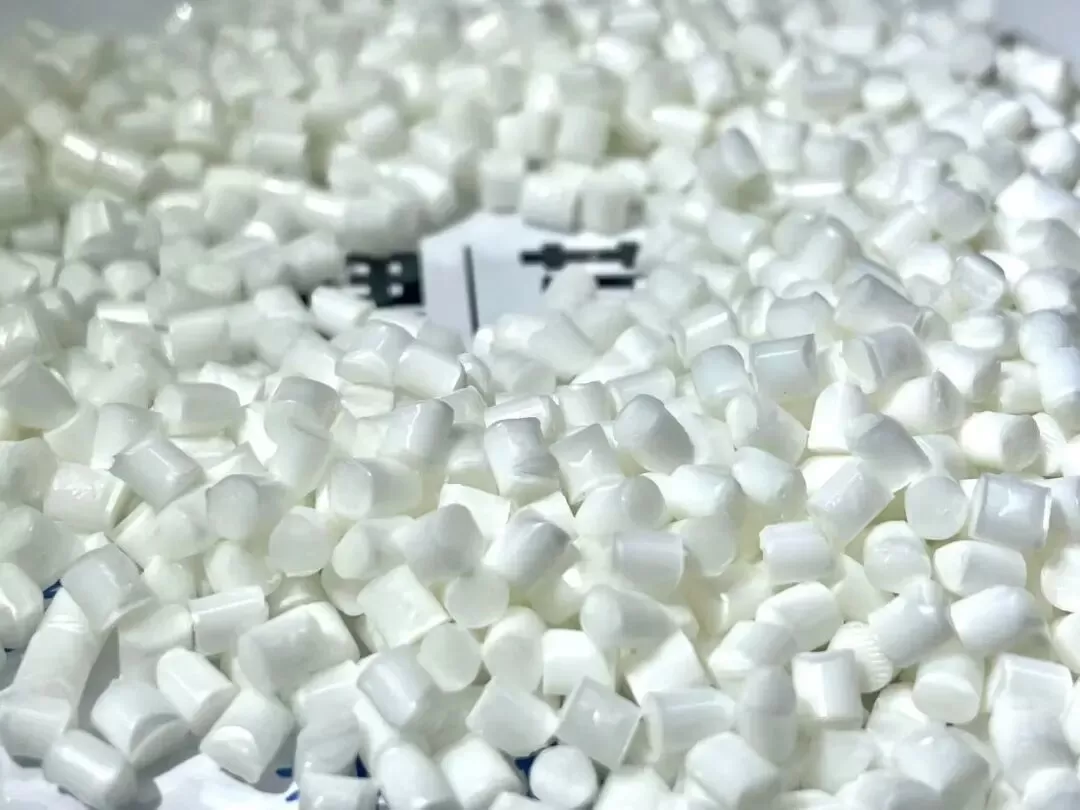
Over the past three years since its establishment, Sipeng Technology has steadily advanced its industrialization and commercialization efforts. Multiple bio-based products have been launched into the market and are progressively entering the supply chains of renowned domestic and international brands: In collaboration with Angel Yeast, the world's second-largest yeast producer, Sipeng jointly introduced the bio-based chiral butanediol “Biowatol”; Its independently developed “Cold Crystal” series of bio-based materials has been adopted by renowned stationery brands such as Shanghai Hero Group and Japan's Platinum. The “Wildflowers in the Field” series has received awards in Shanghai's cultural and creative sector. The “Jade Dew” series of bio-based materials is now used in packaging for prominent cosmetics brands. The “ZeRoll” series of fresh-keeping film products has been exported to the Middle East, Southeast Asia, and other regions. Concurrently, the company has completed multiple rounds of financing, attracting renowned investment institutions including China National Investment Development Group, Bencao Capital, Zhongke Chuangxing, Rugao Sci-Tech Investment, and Shanghai Guotou Futeng Capital, accelerating the industrial development process.