
Sipeng Technology is a high-tech enterprise specializing in the field of negative-carbon synthetic biology. Guided by the philosophy of “Created by Life, Harmonized with Life,” the company is committed to becoming a globally leading provider of bio-based material solutions.
“Pioneers Talk” is an in-depth interview series jointly launched by Pioneer Lab and FT Chinese. Recently, the founder of Sipeng Technology was invited to participate in “Pioneers Talk.” The following is a reprint of the original interview:
A striking portrait of Mars hangs on the office wall, while a 3D-printed rocket booster model sits on the desk. These seemingly distant symbols reveal Tao Fei's romantic side as an entrepreneur—the booster model utilizes bio-based materials developed by Sipeng Technology, and Mars embodies his ultimate vision: using synthetic biology to help humanity achieve material freedom.
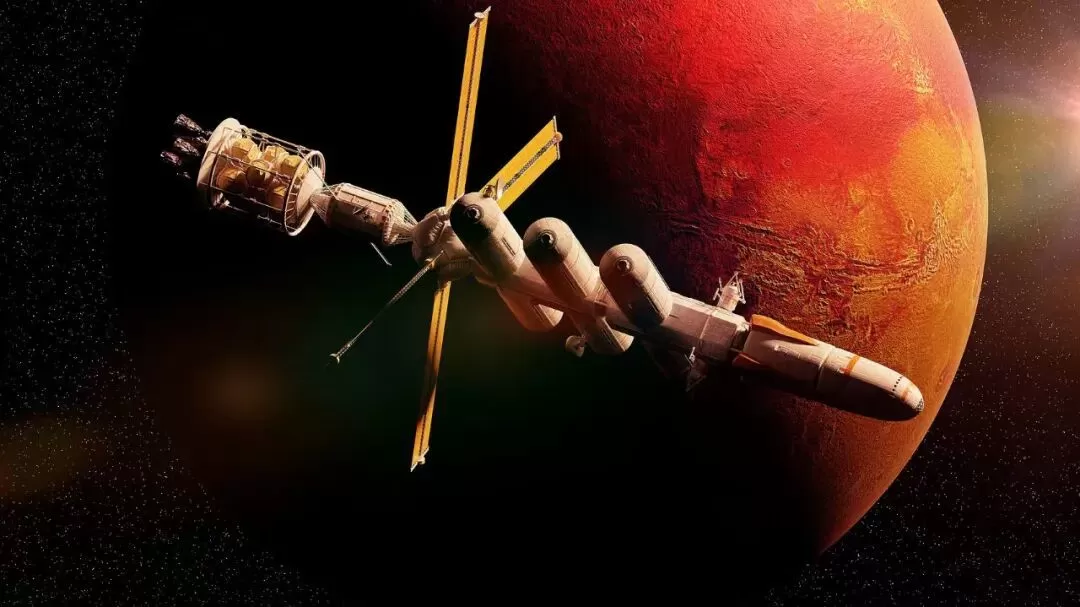
This vision is also reflected in his WeChat profile picture: a boy drawn by his daughter stands on Martian terrain, with a spaceship parked behind him. “This is the vision driving everything we do,” Tao Fei said.
He defines himself through multiple roles: he is a researcher at Shanghai Jiao Tong University engaged in interdisciplinary work at the intersection of synthetic biology, AI, and engineering; the founder of Sipeng Technology, dedicated to converting greenhouse gases into green, sustainable materials; and above all, an explorer who envisions future materials “growing” like living organisms and coexisting harmoniously with Earth's ecosystems.
In an in-depth interview with Tao Fei, we observed how traits like curiosity, focus, cross-disciplinary thinking, and a sense of responsibility intertwine and reinforce each other as he shifts between roles—ultimately shaping the Tao Fei we see today.
Tao Fei has aspired to become an engineer since childhood.
Back then, cars and engines were still rare sights. Whenever a car drove past, the village children would chase after it for a while. To the young Tao Fei, these massive, self-propelled contraptions held an air of mystery. “I couldn't figure out why these things could move on their own,” he recalls. This intense curiosity drove him to observe and explore.
Whenever someone repaired a tractor or machinery, he would crowd around, often forgetting to eat or sleep. “I'd just stand there watching, observing how they fixed it.” He tried to understand the logic behind how machines worked through observation. This observational skill later became a crucial foundation for his scientific research abilities.
After observation came hands-on experimentation. He progressed from crafting wooden boxes to shaping wire and sheet metal, even manually winding small electric motors. “Unlike today where you can buy parts online or print them, we had nothing back then,” Tao Fei recalls. “We had to use whatever materials were available and figure out how to build something by hand.”
The fusion of curiosity and hands-on skills nurtured Tao Fei's engineering mindset early on. Yet this was merely the beginning. What truly shaped his character today was a turning point during junior high.
It was an accident he describes as “almost costing me my life.” “After going through something like that, your mindset naturally changes,” Tao Fei admits. He gained two insights: First, life is fragile—“a hair's breadth away, gone in an instant”; Second, precisely because of this, one should commit wholeheartedly to everything.
Before the accident, Tao Fei had adopted a “good enough” attitude, never fully dedicating himself to his studies. Afterward, his approach changed completely. “If you're going to learn something, you should learn it intensely and pursue it to the utmost.”
This shift quickly yielded positive results. His grades improved dramatically, remaining outstanding from high school through university, and he tasted the rewards of giving his all.
From then on, “giving it my all” became Tao Fei's enduring creed. “You can't approach tasks with a lazy mindset, thinking 80% is good enough. That attitude makes it hard to accomplish anything. You must exhaust every method and every minute to push something to its absolute limit—only then can you truly do it well.”
With curiosity and focus, Tao Fei found his introduction to interdisciplinary work across the ocean.
From 2012 to 2013, Tao Fei, already a faculty member at Jiaotong University, traveled to MIT for a visiting scholar program. That experience left a profound and lasting impression on him.
The MIT Media Lab is a quintessential “antidiscipline” space, where individuals from diverse backgrounds—art, architecture, mechanical engineering, electronics, computer science—converge. This environment revealed to Tao Fei another dimension of innovation: “Without crossing boundaries, without the migration of ideas and knowledge across different industries, it's difficult to achieve innovation.”
What impressed Tao Fei even more than the “antidiscipline” concept was the atmosphere of intellectual collision among people at MIT.
“The difference in atmosphere was quite significant,” Tao Fei recalls. At MIT, people habitually gathered to chat, drink coffee, and attend lectures—not as organized events, but as natural occurrences. “One of our project ideas back then emerged from coffee chats with industry friends.”
This wasn't polite socializing but genuine intellectual sparring, where everyone challenged each other. “The collision of ideas between people is the true source of innovation,” Tao Fei states. “This deeply resonated with me—only with such an atmosphere can innovation thrive.”
Since returning to China, Tao Fei has consistently advocated for fostering this environment at universities. Today, Jiaotong University boasts a robust interdisciplinary culture, with increasing exchange activities like the Young Faculty Forum. Tao Fei has also been actively building his own interdisciplinary “circle of friends.”
“Build friendships first, then pursue collaborations,” he explains. For instance, in his lab, he applies computational thinking to research and recruits team members with diverse backgrounds in chemistry, computer science, and other fields.
The Morning Star Fellowship event exemplifies this approach. When Tao urgently needed a nanotechnology expert, the program coincidentally paired him with a chemistry professor for shared accommodation. “We were both at Jiaotong, yet we didn't know each other,” he recalls with a smile. Their collaboration soon led to joint research on nanosensors.
This interdisciplinary mindset also shaped his early explorations in merging AI with biology.
In 2014, Tao Fei pioneered research on the “intelligent metabolic reprogramming” methodology—one of the earliest such endeavors in the field.
His initial motivation was straightforward: “I wanted to save effort—let's be honest, it was laziness.” He explained that biological experiments require extensive trial and error, consuming significant human resources, finances, and especially time.
Could tools from IT and bioinformatics be leveraged to reduce trial-and-error cycles and boost productivity? This idea propelled him across disciplinary boundaries. He personally wrote code, later attracting interested students to join. This exploration unfolded across four tiers: discovering novel functional genes, modifying protein functions, designing genetic circuits, and optimizing cellular systems.
“Building a company requires even more collision,” Tao Fei said. “From basic research to engineering development to commercial operations, people from every field are needed, and cross-pollination happens more frequently.”
He mentioned that one key driver of “organized research” promoted by universities and governments is interdisciplinary collaboration—bringing different people together to tackle projects. “This way, interdisciplinary innovation naturally emerges.”
“Once a technology emerges, our first consideration is whether it can be industrialized and applied,” said Tao Fei. As a technology developer, he prefers to “drive the process personally”—to get hands-on.
Tao Fei explained that the corporate structure efficiently aggregates talent and resources. “It allows us to find many people who share our vision and are passionate about working together.”
However, transitioning from research to business requires a fundamental shift in mindset. Tao Fei outlined several key transformations.
The first shift is from “groundbreaking” to “reliable.” While academia pursues novel ideas and revolutionary technologies, businesses prioritize sustainability and stability.
The second shift demands a market mindset. The core question is: Who will pay? In biological terms, the system must be “self-sustaining.” “Without this, the transition fails.”
The third shift involves balancing technological ideals with commercial realities. “Technological ideals may soar as high as Mount Everest. But the commercial path cannot reach the summit in one leap—it must be designed with incremental milestones.”
Tao Fei outlined two approaches: gamble on the technology succeeding in ten years, or proceed step by step. For Sipeng, “we chose the latter path. We maintain a clear and steadfast overarching direction without setting unattainable goals. The commercial trajectory advances incrementally toward that vision.”
Underpinning these shifts is Tao Fei's core principle: advanced technology must deliver low costs to benefit the masses.
Synthetic biology holds precisely this potential.
Tao Fei draws an analogy with farming: crops breathe in carbon dioxide and use sunlight to grow grain. Microbial cells act like miniature plants—engineered to switch from producing soybeans to generating PLA polymers. “This shares the same fundamental principle as sugar production: both are enzyme-catalyzed chemical processes.”
This production method is highly integrated. Traditional plastic manufacturing requires oil extraction, refining, ethylene production, polymerization, and modification—a lengthy industrial chain. “For us, the entire process from carbon dioxide to plastic is contained within a micrometer-sized cell,” Tao Fei explains. “Every step is encapsulated within a single cell.”
More significantly, it enables raw material switching—from fossil resources to carbon dioxide—and employs a mild production method that requires neither high temperatures nor pressures, operating under conditions compatible with life.
“We say the material is grown—grown using cells,” Tao Fei stated.
These seemingly miraculous theories are now being transformed into tangible products.
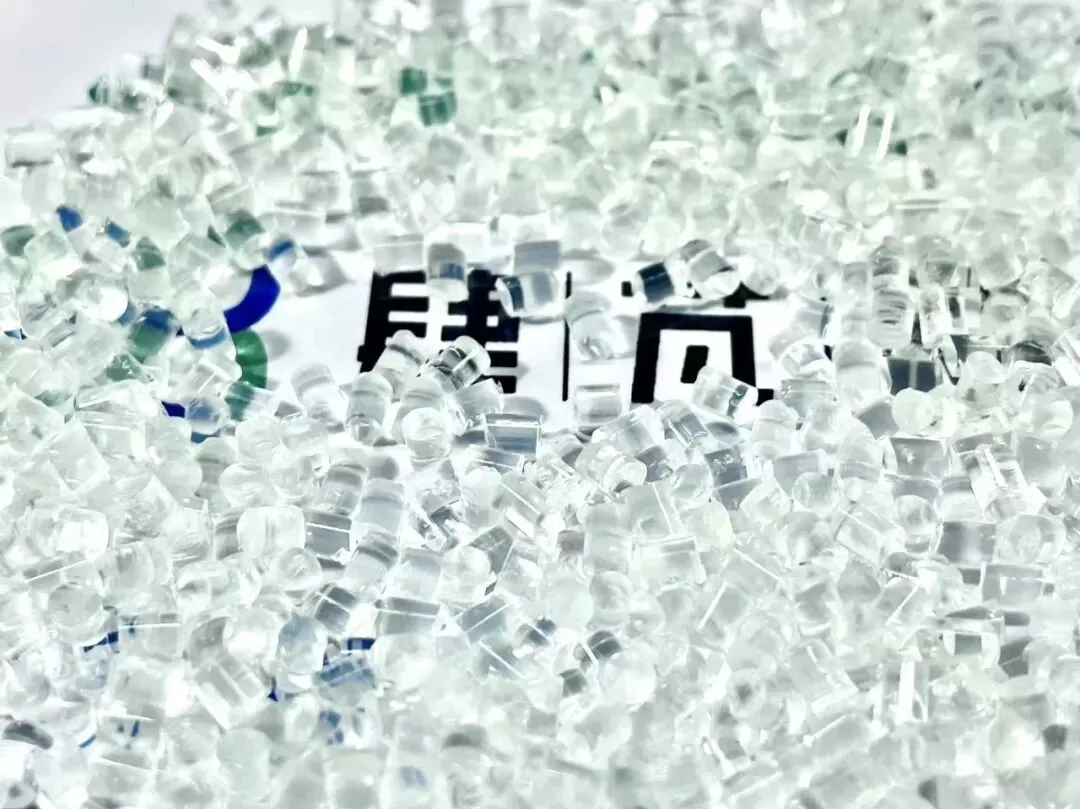
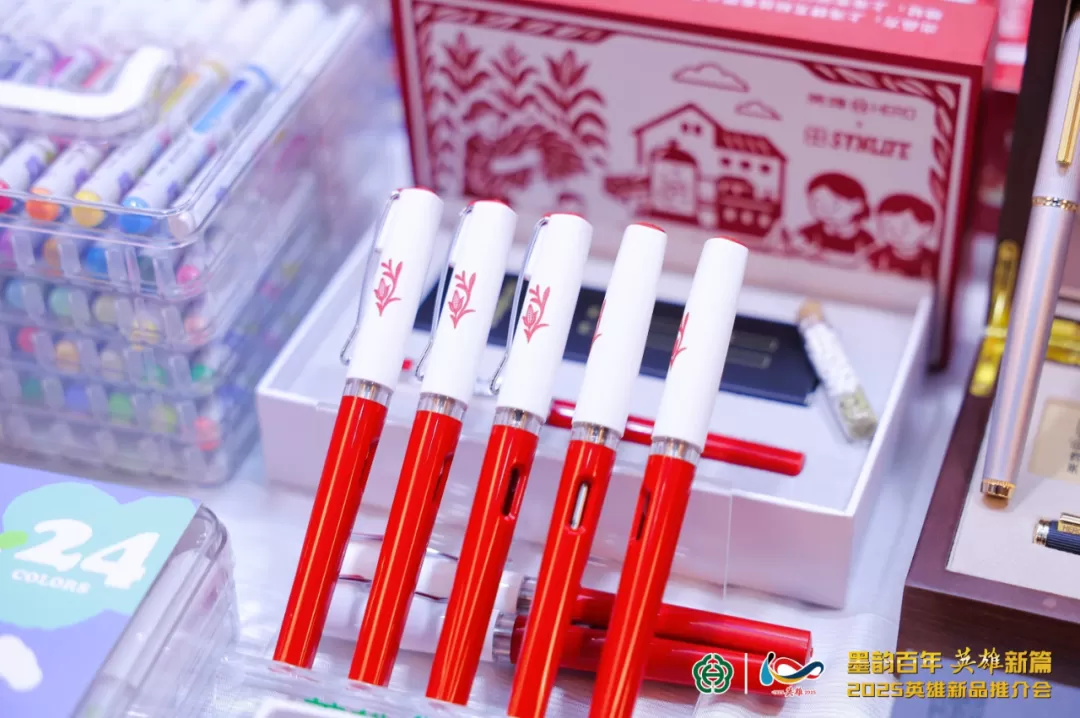
Tao Fei pulled out several Sipeng products in the office. The first item was a fountain pen co-branded with Hero, featuring a barrel made from high-performance PLA material. “We replaced traditional plastics with a bio-based material that's phthalate-free and more resilient, enhancing the health and safety attributes of stationery.”
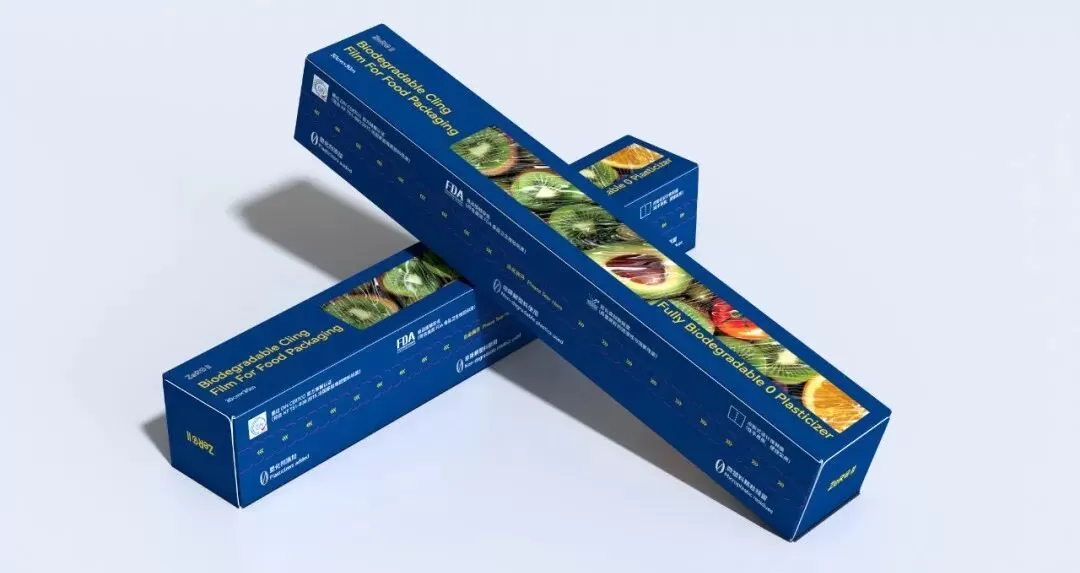
The second item is plastic wrap, with “ZeRoll” printed on the outer packaging—this trademark aims to visually convey the product's commitment to a ‘zero’ philosophy. “Our bio-based products incorporate only biodegradable or biocompatible ingredients.” The product has been exported to multiple Belt and Road countries.
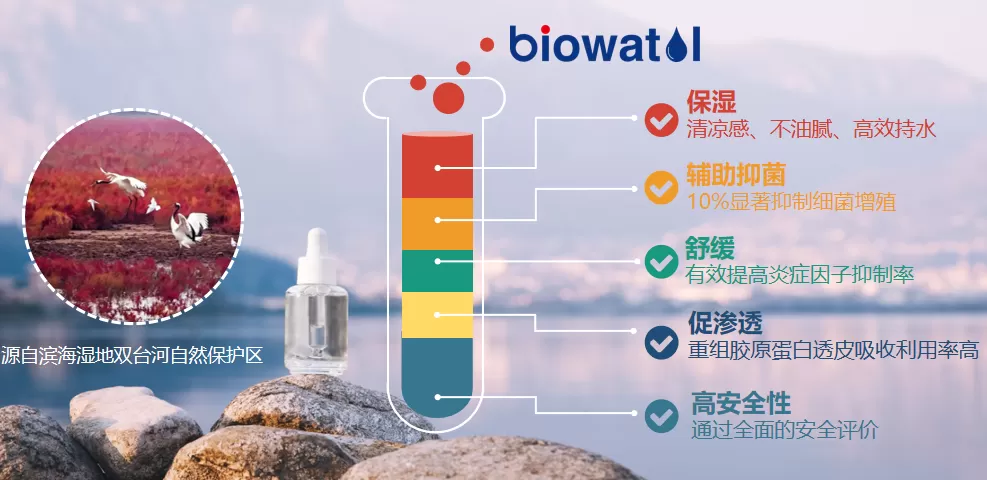
The third item is a skincare product containing small-molecule ingredients fermented by microorganisms, offering excellent moisturizing effects and strong biocompatibility. “This substance naturally exists in the environment, secreted by bacteria. The biological world is familiar with it, minimizing rejection.”
The speed of product implementation has exceeded expectations. Behind this achievement, science communication has played an indispensable role. “Many misunderstandings stem from a lack of understanding. When science communication is done well, people will gain a better understanding of the biomanufacturing industry and embrace it more readily.”
Our conversation about the future spans from microscopic bacteria to grand interstellar visions. The painting of Mars on the office wall, juxtaposed with the 3D-printed rocket thrusters on the bookshelf, points to the same vision where life and materials mutually drive each other.
To Tao Fei, cyanobacteria represent Earth's “pioneer lifeforms”: accumulating organic matter through photosynthesis while releasing oxygen, they gradually transformed Earth's atmosphere from reducing to oxidizing over eons, paving the way for other life. He believes Mars will similarly require such pioneers—locally producing materials, fuel, and oxygen from Martian resources, as transporting these from Earth at scale remains impractical.
The propulsion model in his office, itself 3D-printed from SiPeng PLA material, symbolizes the closed-loop system he envisions: biofuels synthesized through synthetic biology will power engines of the same type, achieving cross-scale connectivity from microorganisms to spacecraft.
He views AI for Biology as one of the most promising directions. Designing and constructing cellular factories parallels chip design and manufacturing, requiring three core tools: integrated knowledge graphs, EDA-style digital cellular models, and biological fabrication robots. The first provides foundational knowledge for biological design, the second simulates and simulates cellular construction, and the third enables high-throughput cellular factory construction. Their synergy will accelerate synthetic biology's industrial development.
In his vision, synthetic biology can deliver tangible outcomes in material conversion within the near term—producing small molecules and polymers from carbon dioxide, with results expected within the next few years.
The longer-term goal is “material autonomy”: while energy sources may evolve through nuclear fusion and new technologies, material supply remains heavily reliant on petrochemical systems. He aims to establish a sustainable pathway from carbon dioxide to diverse organic compounds through bio-manufacturing. Once this capability is mastered, nations can achieve resource self-sufficiency, spacecraft can maintain internal material cycles, and human planetary exploration gains tangible support.
In his view, technology companies and entrepreneurs must maintain sufficient imagination and aspiration for the future of technology. Higher goals provide the traction needed to drive teams forward.
“Those who dare to venture into uncharted territory are pioneers.” When asked how to define “pioneer,” Tao Fei offered his answer.
This definition points both to cyanobacteria—the “pioneers of life” that transformed Earth's atmosphere—and to his own choice: moving from the laboratory to industry, using microbes to “grow” materials.
(Sipeng Technology is a high-tech enterprise specializing in negative-carbon synthetic biology. Guided by the philosophy of “Created by Life, Harmonized with Life,” the company is committed to becoming a global leader in bio-based material solutions. Leveraging partnerships with top research institutions like Shanghai Jiao Tong University, the company has built an end-to-end ecosystem spanning R&D to industrialization. Sipeng pioneered a proprietary negative-carbon production technology that directly synthesizes polylactic acid (PLA) from carbon dioxide in a single step. This fully independent intellectual property holds the potential to overcome the traditional bio-manufacturing bottleneck of competing with food crops for resources, offering dual advantages in cost and environmental sustainability. Currently, the company offers a series of high-performance bio-based materials, including Yogtic®, widely used in premium stationery, eco-friendly packaging, cosmetics, and medical applications. These products have entered the supply chains of multiple Fortune 500 companies. With its forward-thinking technology and industrialization capabilities, Sipeng Technology is leading the bio-manufacturing industry toward a future defined by intelligence, non-grain dependency, and sustainability.